4 February 2026
Share:



Tiny Paws, Big Responsibility: How to Protect Your Pet’s Feet in Winter and Summer
When we think about caring for our small pets, we often focus on nutrition, grooming, and regular veterinary visits. Yet one of the most vulnerable parts of a pet’s body is frequently overlooked: their paws. Paw pads are not just “cute little feet”—they are complex, sensitive structures that absorb impact, regulate temperature, and protect bones and joints.
For small domestic animals, especially toy-breed dogs and other companion pets that spend time outdoors, paw protection is not a luxury. It is a necessity in both cold and hot seasons.
This article explores why paw care matters, what dangers exist in winter and summer, and how responsible owners can prevent injury.
Why Paw Pads Are So Sensitive
A pet’s paw pads are made of thickened skin and fatty tissue designed to cushion movement. Despite their durability, they are still living tissue with nerve endings and blood supply.
They can crack, burn, dry out, or become chemically irritated. Small pets are especially at risk because:
- Their body mass is low
- Their paws are smaller and closer to the ground
- They lose heat faster
- They are more sensitive to environmental stressors
Healthy paws are essential for mobility, confidence, and overall well-being.
Winter Risks: More Than Just Snow
Many people assume winter danger equals cold snow. In reality, snow is only part of the problem.
Ice and Freezing Temperatures
Cold surfaces can cause:
- Dryness and cracking
- Micro-injuries
- Frostbite in extreme conditions
Small dogs often lift their paws or refuse to walk when they are too cold. This is not stubbornness—it is a sign of discomfort.
Chemical De-icers and Road Salt
This is one of the biggest hidden threats. Streets and sidewalks are often treated with:
- Salt
- Chemical de-icers
- Anti-freeze compounds
- Mixed urban pollutants
These substances can:
- Irritate skin
- Cause burns
- Trigger allergic reactions
- Be toxic if licked
Pets naturally lick their paws after walks. If chemicals are present, ingestion becomes a real danger.
Sharp Ice and Mechanical Injury
Broken ice, gravel, and frozen debris can create tiny cuts. These may seem minor but can lead to:
- Infection
- Pain while walking
- Long-term sensitivity
Summer Risks: Heat Is Just as Dangerous
Many owners protect paws in winter but forget about summer. Heat can be equally harmful.
Hot Asphalt and Pavement
Sun-heated surfaces can reach temperatures far higher than the air temperature. Pavement may become hot enough to burn skin.
A simple rule:
If you cannot comfortably hold your hand on the pavement for 5–7 seconds, it is too hot for paws.
Burned paw pads can blister, peel, and become extremely painful.
Sand and Dry Ground
Beach sand and dry soil can overheat and cause irritation or burns. Small pets feel this quickly due to their size.
Signs of Paw Damage
Watch for:
- Limping
- Excessive licking
- Redness or swelling
- Cracks or bleeding
- Reluctance to walk
- Darkened or peeling pads
Any of these signals mean it is time to inspect the paws and possibly consult a veterinarian.
How to Protect Your Pet’s Paws
Use Protective Footwear
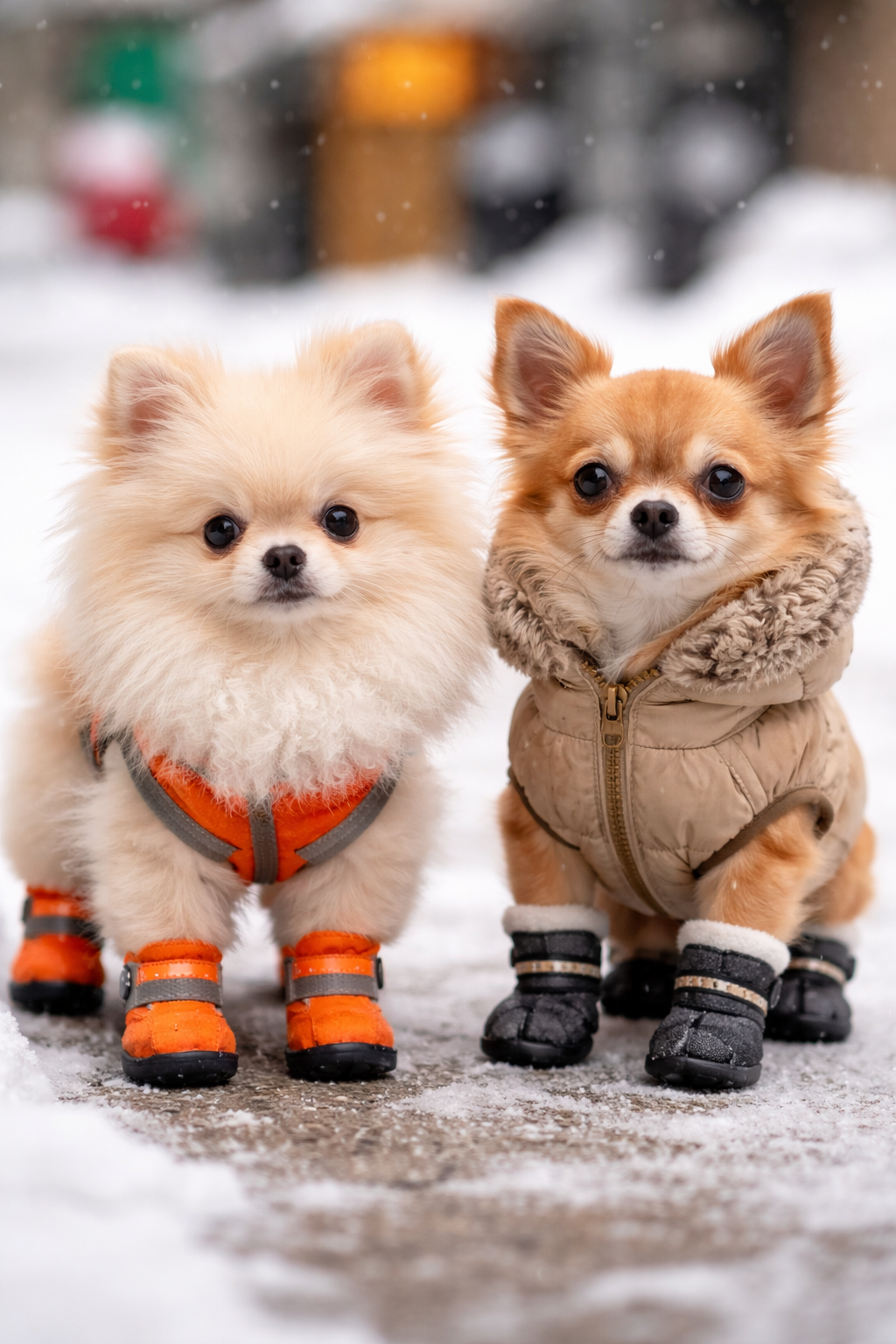
Pet boots are not fashion—they are functional gear. Good boots:
- Shield from chemicals and heat
- Prevent mechanical injury
- Provide insulation
- Improve grip on slippery surfaces
Introduce them gradually so your pet can adapt.
Paw Balms and Waxes
Protective balms create a barrier against:
- Salt
- Cold
- Heat
- Dryness
They also moisturize and prevent cracking.
Rinse Paws After Walks
In winter especially, rinse or wipe paws after walks to remove chemicals. Dry them thoroughly.
Test the Ground
Before walks:
- Check pavement temperature in summer
- Avoid peak heat hours
- Choose shaded routes
Keep Fur Trimmed
Long fur between paw pads can trap ice, chemicals, and debris. Regular grooming reduces this risk.
Responsible Care Is Preventive Care
Protecting paws is part of responsible pet ownership. It prevents pain, medical bills, and long-term sensitivity.
Small actions—like checking the ground temperature or using balm—make a significant difference.
Final Thought
Our pets trust us completely. They walk where we lead them, even when it hurts. Paw care is a simple but powerful way to show respect for their comfort and safety.
Tiny paws carry big hearts. Protecting them is one of the kindest things we can do.