12 January 2026
Share:



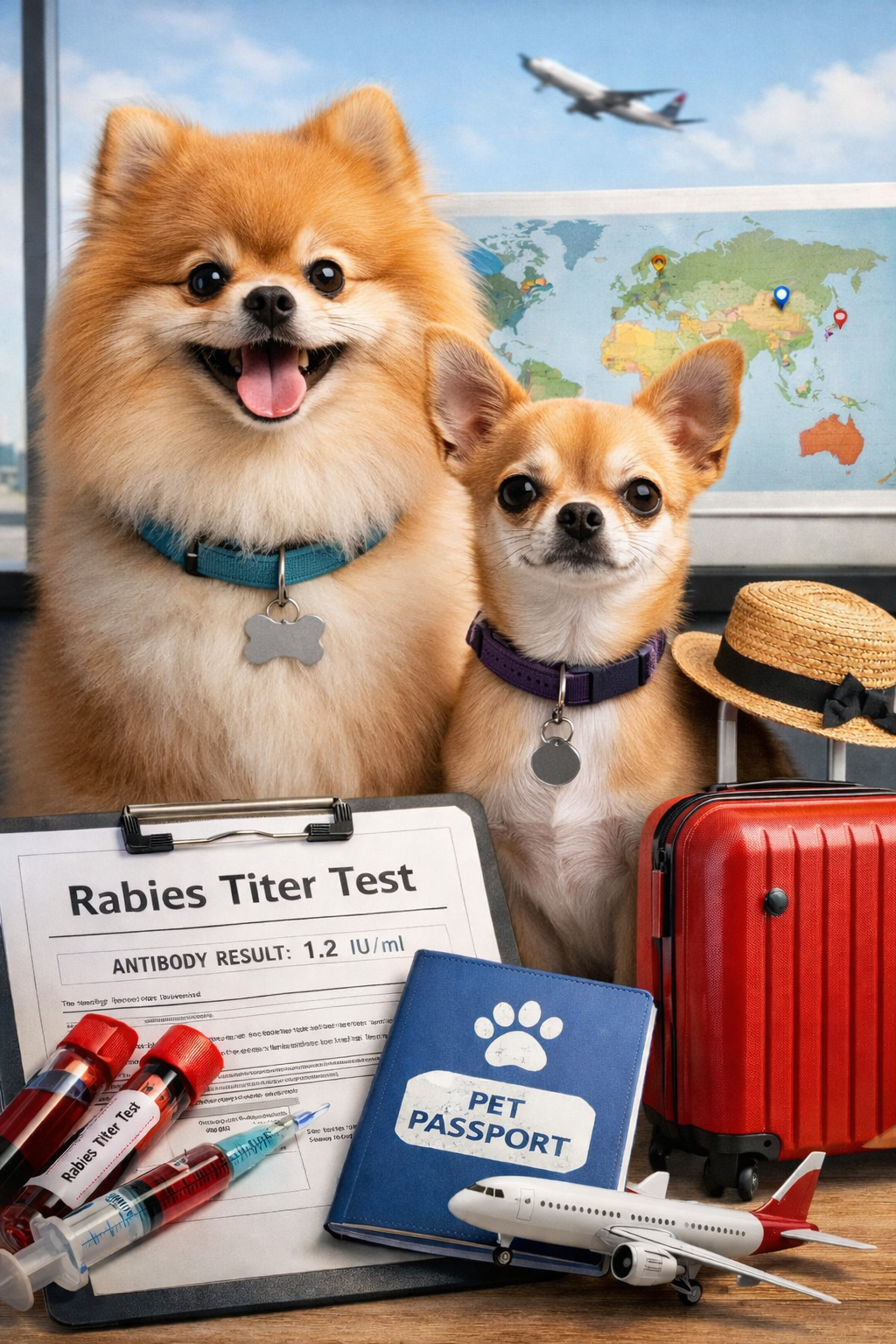
Rabies Titer Test: A Crucial Step for Safe International Travel With Your Pet
Traveling internationally with a pet is a beautiful experience — but it also comes with serious responsibilities. One of the most important, and often misunderstood, requirements for international pet travel is the Rabies Titer Test.
This test is not a formality. It is a key element of biosecurity that many countries rely on to prevent the spread of rabies — a deadly virus for both animals and humans. Proper preparation can make the difference between a smooth journey and months of stress, quarantine, or denied entry.
This article explains what the Rabies Titer Test is, why it matters, how it works, and why early planning is essential.
What Is a Rabies Titer Test?
The Rabies Titer Test (also called a rabies antibody titration test or rabies serology test) is a laboratory blood test that measures the level of antibodies in your pet’s blood after rabies vaccination.
In simple terms, it confirms that:
- the rabies vaccine was administered correctly
- the animal’s immune system responded properly
- the level of protection meets international standards
For international travel, most authorities require a minimum antibody level of 0.5 IU/ml to consider the animal sufficiently protected.
Why Many Countries Require This Test
Rabies is still present in many parts of the world. Because of this, countries with strict animal health policies require proof that incoming pets do not pose a risk.
Countries that commonly require a Rabies Titer Test include:
- European Union member states (for entry from certain non-listed or high-risk countries)
- Japan
- Australia
- New Zealand
- Singapore
- United Kingdom (in specific cases)
- Other rabies-controlled or rabies-free regions
Without an approved titer result, pets may face:
- mandatory quarantine (weeks or months)
- refusal of entry
- return to the country of origin at the owner’s expense
An Important Reality: Only a Few Laboratories Are Accepted
One of the most critical points pet owners often miss is this:
Not all laboratories are authorized to perform Rabies Titer Tests for international travel.
Only a limited number of laboratories worldwide are officially certified and recognized by national and international veterinary authorities (such as the EU or Japanese authorities).
If the blood sample is analyzed by a non-approved lab, the result may be completely invalid, regardless of how good the antibody level is.
This is why professional guidance and early planning are so important.
The Step-by-Step Process
1. Rabies Vaccination Comes First
Your pet must be vaccinated against rabies with an internationally recognized vaccine.
Important:
- The pet must be microchipped before vaccination (for most countries).
- The vaccination must be valid and properly documented.
2. Mandatory Waiting Period
After vaccination, you must wait at least 30 days before blood can be drawn for the Rabies Titer Test.
Blood drawn earlier will not be accepted.
3. Blood Sampling
A veterinarian takes a blood sample and sends it to an approved laboratory.
This step must be done carefully:
- correct labeling
- correct microchip number
- correct documentation
Any error can invalidate the test.
4. Laboratory Analysis
The lab measures the level of rabies antibodies.
Processing time varies:
- usually 3 to 6 weeks
- sometimes longer during peak travel seasons
5. Validity of the Result
In most cases:
- the Rabies Titer Test remains valid as long as the rabies vaccination remains valid
- typically up to 3 years, provided boosters are done on time
If a booster is missed or delayed, the entire process may need to be repeated.
Timing Is Everything
One of the biggest mistakes pet owners make is starting too late.
Consider this realistic timeline:
- rabies vaccination
- 30-day waiting period
- blood sampling
- 3–6 weeks for lab results
- additional waiting period required by some countries
In practice, preparation can take 2 to 4 months, sometimes more.
This is why international travel with pets should always be planned well in advance.
Common Mistakes to Avoid
- assuming any laboratory can perform the test
- vaccinating after blood sampling
- missing the 30-day waiting rule
- letting the rabies vaccine expire
- starting preparation too close to the travel date
Each of these mistakes can lead to delays, additional costs, or denied entry.
Why This Test Protects Everyone
Beyond paperwork, the Rabies Titer Test serves a larger purpose:
- protects rabies-free countries
- protects local animal populations
- protects people
- ensures your pet is genuinely protected
It is a responsible step that reflects care, planning, and respect for international health standards.
A Thoughtful Approach to Traveling With Pets
Traveling with a pet is not just logistics — it is a commitment to their safety, comfort, and well-being.
The Rabies Titer Test is one of those quiet but crucial steps that makes international travel possible without fear, quarantine, or last-minute surprises.
With the right preparation, certified laboratories, and proper timing, international pet travel can be smooth, safe, and humane.
Final Thoughts
If you are planning to travel internationally with your pet:
- start early
- follow the correct sequence
- work only with certified laboratories
- keep all documents carefully organized
Preparation is not stress — it is peace of mind.
At MiMOZA Pet Boutique, we believe that responsible preparation is part of loving your pet. International travel should be an extension of care, not a risk.