By Jenya Alexander — Founder of MiMOZA Pet Boutique.


When “Bad Behavior” Isn’t Bad at All

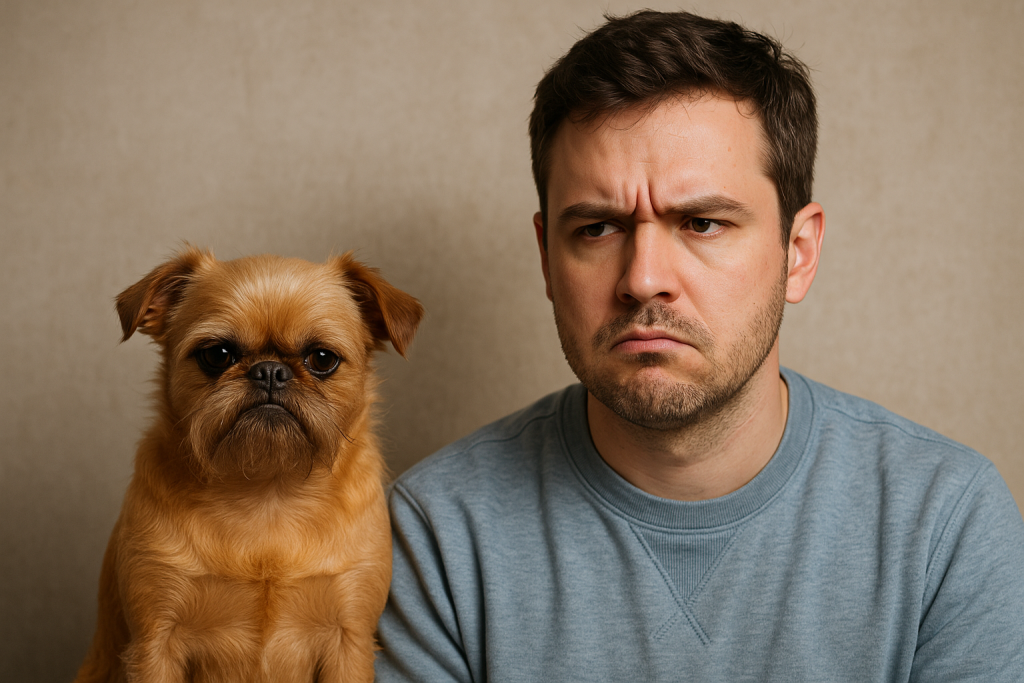
Let’s be honest — if your dog acts a little wild, it’s rarely just about the dog.
Most of the time, it’s about you.

Our dogs are emotional mirrors.
They pick up the smallest cues — your tone, your stress level, the way your shoulders tighten, even the way you breathe.
Your dog doesn’t only hear you — she feels you.

If your pup seems anxious, reactive, or restless, don’t rush to blame her personality.
Pause and ask yourself: What part of me is she reflecting right now?


The Mirror on Four Paws

Dogs are not just our companions — they are moving reflections of our inner world.
When you rush, your dog becomes hyperactive.
When you stay calm, she settles instantly.
When you worry, she looks at you with that “what’s wrong?” face, mirroring your tension perfectly.

Many dog owners think their dogs “misbehave,” but in truth, most of those behaviors are messages.
Your dog is saying, “Hey, this is what your energy feels like right now.”


Training Starts Within

Dog training isn’t just about teaching commands — it’s about emotional consistency.
Before your dog learns to sit, stay, or come, she learns how your nervous system behaves.
Your calm voice, your steady breathing, your gentle presence — those are the first lessons she ever receives.

Every leash correction, every “good girl,” every moment of patience or frustration becomes a signal.
You are not just the trainer — you’re the environment your dog grows in.


Dogs Feel Before They Think

Humans think first, feel later.
Dogs feel first — and that is their genius.

They sense vibrations, tone, body movement, and rhythm long before words appear.
This is why a dog will come closer when you’re sad or step back when you’re angry — not because she understands words, but because she reads frequencies.

If you want a balanced dog, you have to become a balanced human.
And that’s not a punishment — it’s an invitation to grow together.


Emotional Wi-Fi: Always On

Think of your dog as emotional Wi-Fi — always connected to your signal.
If the connection feels messy, she starts buffering.
If it’s stable and loving, she relaxes and flows.

That’s why anxious owners often have anxious dogs.
Calm owners have peaceful ones.
It’s never about dominance — it’s about resonance.


A Funny Truth: They Copy Us Too Well

Sometimes it’s funny how literally they mirror us.
Your dog starts yawning during your Zoom calls, rolls eyes (well, almost) when you complain, or waits at the fridge when you’re stressed at midnight.
She’s your emotional twin — just smaller, furrier, and much cuter.

They say pets resemble their owners.
Turns out, they become them — minus the credit card bills.


Healing Together

The next time your dog misbehaves, take a breath.
Instead of reacting, get curious.
What is she showing you about yourself?

Maybe her restlessness is your hidden anxiety.
Maybe her need for attention is your unspoken need for connection.
And maybe her peace — when you finally slow down — is your reward for showing up differently.


Harmony Is a Shared Practice

Dogs don’t need perfect owners — they need present ones.
Your presence, your calm attention, your consistency — that’s the real obedience training.
Once you change your energy, your dog doesn’t just follow commands… she syncs with you.

So if your dog acts a little crazy, smile.
Because maybe she’s not losing it — she’s just reflecting the parts of you that still need a hug.


Final Thought

Living with a dog is like living with your emotional mirror — honest, loyal, and without filters.
Every wag, bark, or sigh is feedback from the universe wrapped in fur.

So listen closely.
You might just realize your dog has been helping you heal all along. 🐾💛


Author: Jenya Alexander
Founder of MiMOZA Pet Boutique Montreal — where psychology meets paw prints.
Small dogs, like all pets, can symbolize deeper emotions that originate from our subconscious. Our choice of pets, how we relate to them, and the feelings they evoke often mirror our psychological needs, hidden emotions, and unresolved conflicts.

What Lies Behind Our Relationships with Small Dogs?

The Need for Protection and Security
Small dogs often represent guardianship for us. Despite their size, they provide emotional support and security, linking to an unconscious need for safety stemming from childhood or past traumas. They serve as shields against loneliness and external threats, which are often psychological.

Unconditional Love and Acceptance
Pets accept us as we are, without demands for change, fulfilling our deep-seated need for unconditional love. Unlike humans, dogs do not judge or abandon us during tough times. This bond helps individuals cope with feelings of inadequacy and can reflect the affection we seek but may not receive from loved ones.

Projection of Unfulfilled Expectations and Dreams
People often project onto their pets what they couldn’t realize in human relationships. A dog may symbolize a “child” for unfulfilled parental instincts or an “ideal partner” who offers loyalty and companionship without betrayal.

Working Through Internal Traumas and Complexes
Our attitudes towards pets can unveil hidden traumas. Excessive care for a pet might indicate a desire to heal personal wounds. If someone felt abandoned in childhood, a small dog can become a symbol of unwavering loyalty and emotional connection, compensating for lost relationships.

Connection with Archetypes
Small dogs embody archetypes from our collective unconscious, often acting as “helpers,” “companions,” or “protectors.” Our choice of pets reflects relevant archetypes in our lives. For instance, selecting a small dog may signify a desire for constant companionship, embodying protection despite its small size.

What Influences the Choice of Pet’s Gender

Feminine or Masculine Energy
The gender of a pet often relates to our relationships with the opposite sex or a specific type of energy we seek. Those lacking masculine energy may choose male dogs for protection, while those desiring nurturing may prefer females. This choice frequently reflects the balance between feminine and masculine energies in one’s life.

Conclusion

Small dogs are more than pets; they reflect our deepest emotional needs, traumas, and archetypes. Our relationships with them reveal symbols of our subconscious. Pets can serve as channels for processing internal conflicts, aiding in self-understanding, healing emotional wounds, and balancing internal energies.

In a world that often feels increasingly aggressive, stressful, and lonely, the need for emotional support is more significant than ever. While various avenues offer solace, one heartwarming suggestion stands out – Pomeranians as emotional support companions. These small-statured dogs possess a lovingly devoted personality that can work wonders for those in need.

Loyal Companions

Pomeranians are renowned for forming deep attachments to their owners, staying steadfast by their side through thick and thin. Their unwavering loyalty provides a comforting presence in times of distress, making them ideal emotional support dogs.

Small Size, Big Personalities

Don’t let their toy-sized appearance fool you; Pomeranians boast larger-than-life personalities. They are not just cute; they are also excellent little guard dogs. Their alert nature and keen senses ensure that they are always on the lookout, offering a sense of security to their owners.

Understanding Their Needs

It’s important to note that Pomeranians are prone to separation anxiety and may not be the best fit for individuals who frequently leave them home alone. However, if you’re seeking a faithful companion to accompany you everywhere, a Pomeranian will gladly fill that role.

Intelligent and Trainable

Pomeranians are highly intelligent and respond well to training, provided it’s in manageable, bite-sized doses. Their willingness to learn makes them versatile emotional support animals, capable of adapting to various situations.

In a world where emotional support is invaluable, Pomeranians offer not only their small stature but also their immense hearts to those in need. If you’re considering an emotional support companion, we highly recommend welcoming a Pomeranian into your life. Their unwavering devotion and comforting presence can be a beacon of light in challenging times.

Qualifying for Emotional Support

Perfect to have a Pomeranian as an emotional support dog, it’s essential to be diagnosed as emotionally disabled by a licensed medical professional. Conditions that may qualify include:
PTSD,
learning disabilities,
motor skills disorders,
depression,
bipolar disorder, anxiety,
sleep issues,
phobias,
panic disorders, and
personality disorders.