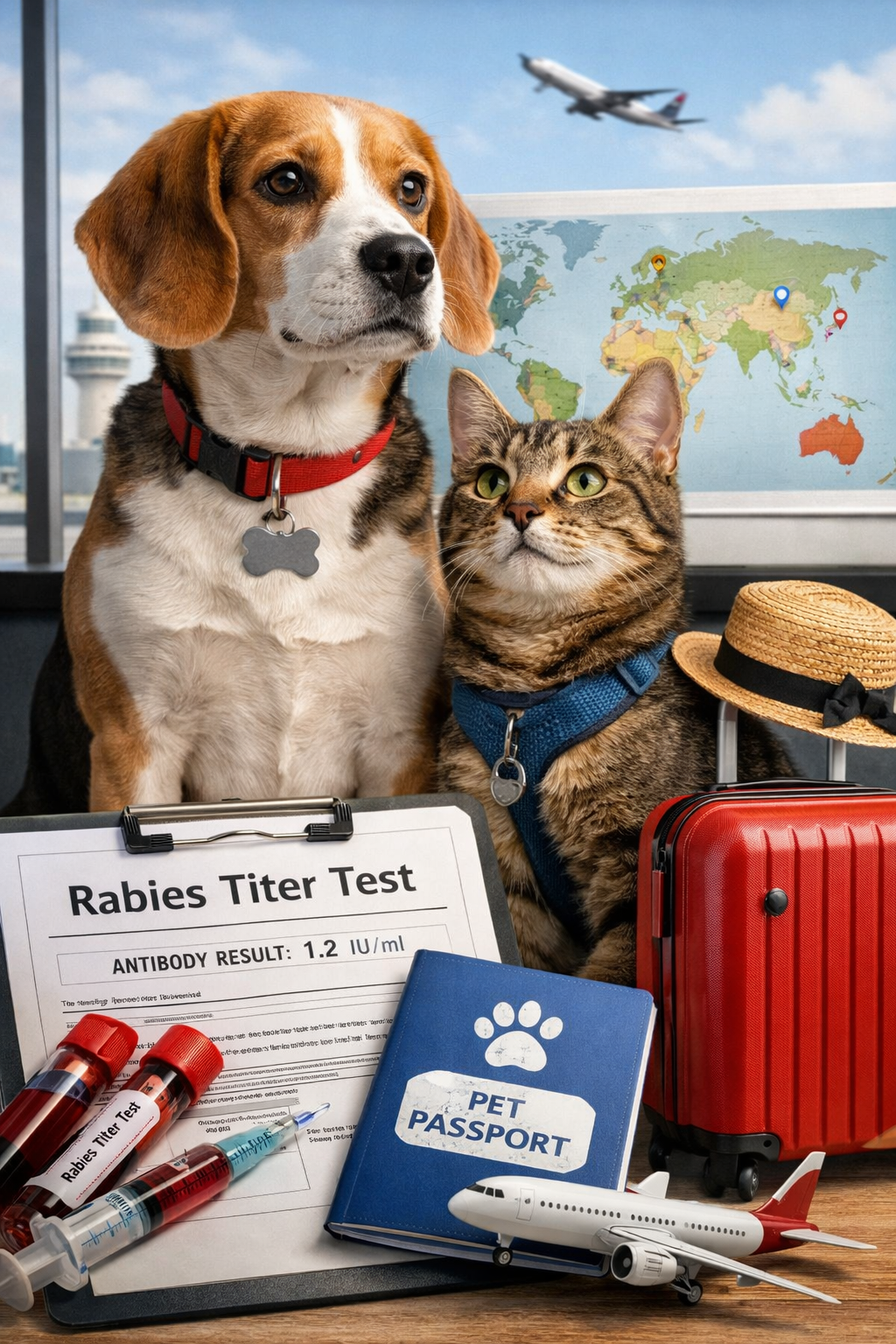
Traveling internationally with a pet is a beautiful experience — but it also comes with serious responsibilities. One of the most important, and often misunderstood, requirements for international pet travel is the Rabies Titer Test.

This test is not a formality. It is a key element of biosecurity that many countries rely on to prevent the spread of rabies — a deadly virus for both animals and humans. Proper preparation can make the difference between a smooth journey and months of stress, quarantine, or denied entry.

This article explains what the Rabies Titer Test is, why it matters, how it works, and why early planning is essential.


What Is a Rabies Titer Test?

The Rabies Titer Test (also called a rabies antibody titration test or rabies serology test) is a laboratory blood test that measures the level of antibodies in your pet’s blood after rabies vaccination.

In simple terms, it confirms that:

  • the rabies vaccine was administered correctly
  • the animal’s immune system responded properly
  • the level of protection meets international standards

For international travel, most authorities require a minimum antibody level of 0.5 IU/ml to consider the animal sufficiently protected.


Why Many Countries Require This Test

Rabies is still present in many parts of the world. Because of this, countries with strict animal health policies require proof that incoming pets do not pose a risk.

Countries that commonly require a Rabies Titer Test include:

  • European Union member states (for entry from certain non-listed or high-risk countries)
  • Japan
  • Australia
  • New Zealand
  • Singapore
  • United Kingdom (in specific cases)
  • Other rabies-controlled or rabies-free regions

Without an approved titer result, pets may face:

  • mandatory quarantine (weeks or months)
  • refusal of entry
  • return to the country of origin at the owner’s expense

An Important Reality: Only a Few Laboratories Are Accepted

One of the most critical points pet owners often miss is this:

Not all laboratories are authorized to perform Rabies Titer Tests for international travel.

Only a limited number of laboratories worldwide are officially certified and recognized by national and international veterinary authorities (such as the EU or Japanese authorities).

If the blood sample is analyzed by a non-approved lab, the result may be completely invalid, regardless of how good the antibody level is.

This is why professional guidance and early planning are so important.


The Step-by-Step Process

1. Rabies Vaccination Comes First

Your pet must be vaccinated against rabies with an internationally recognized vaccine.

Important:

  • The pet must be microchipped before vaccination (for most countries).
  • The vaccination must be valid and properly documented.

2. Mandatory Waiting Period

After vaccination, you must wait at least 30 days before blood can be drawn for the Rabies Titer Test.

Blood drawn earlier will not be accepted.

3. Blood Sampling

A veterinarian takes a blood sample and sends it to an approved laboratory.

This step must be done carefully:

  • correct labeling
  • correct microchip number
  • correct documentation

Any error can invalidate the test.

4. Laboratory Analysis

The lab measures the level of rabies antibodies.

Processing time varies:

  • usually 3 to 6 weeks
  • sometimes longer during peak travel seasons

5. Validity of the Result

In most cases:

  • the Rabies Titer Test remains valid as long as the rabies vaccination remains valid
  • typically up to 3 years, provided boosters are done on time

If a booster is missed or delayed, the entire process may need to be repeated.


Timing Is Everything

One of the biggest mistakes pet owners make is starting too late.

Consider this realistic timeline:

  • rabies vaccination
  • 30-day waiting period
  • blood sampling
  • 3–6 weeks for lab results
  • additional waiting period required by some countries

In practice, preparation can take 2 to 4 months, sometimes more.

This is why international travel with pets should always be planned well in advance.


Common Mistakes to Avoid

  • assuming any laboratory can perform the test
  • vaccinating after blood sampling
  • missing the 30-day waiting rule
  • letting the rabies vaccine expire
  • starting preparation too close to the travel date

Each of these mistakes can lead to delays, additional costs, or denied entry.


Why This Test Protects Everyone

Beyond paperwork, the Rabies Titer Test serves a larger purpose:

  • protects rabies-free countries
  • protects local animal populations
  • protects people
  • ensures your pet is genuinely protected

It is a responsible step that reflects care, planning, and respect for international health standards.


A Thoughtful Approach to Traveling With Pets

Traveling with a pet is not just logistics — it is a commitment to their safety, comfort, and well-being.

The Rabies Titer Test is one of those quiet but crucial steps that makes international travel possible without fear, quarantine, or last-minute surprises.

With the right preparation, certified laboratories, and proper timing, international pet travel can be smooth, safe, and humane.


Final Thoughts

If you are planning to travel internationally with your pet:

  • start early
  • follow the correct sequence
  • work only with certified laboratories
  • keep all documents carefully organized

Preparation is not stress — it is peace of mind.

At MiMOZA Pet Boutique, we believe that responsible preparation is part of loving your pet. International travel should be an extension of care, not a risk.
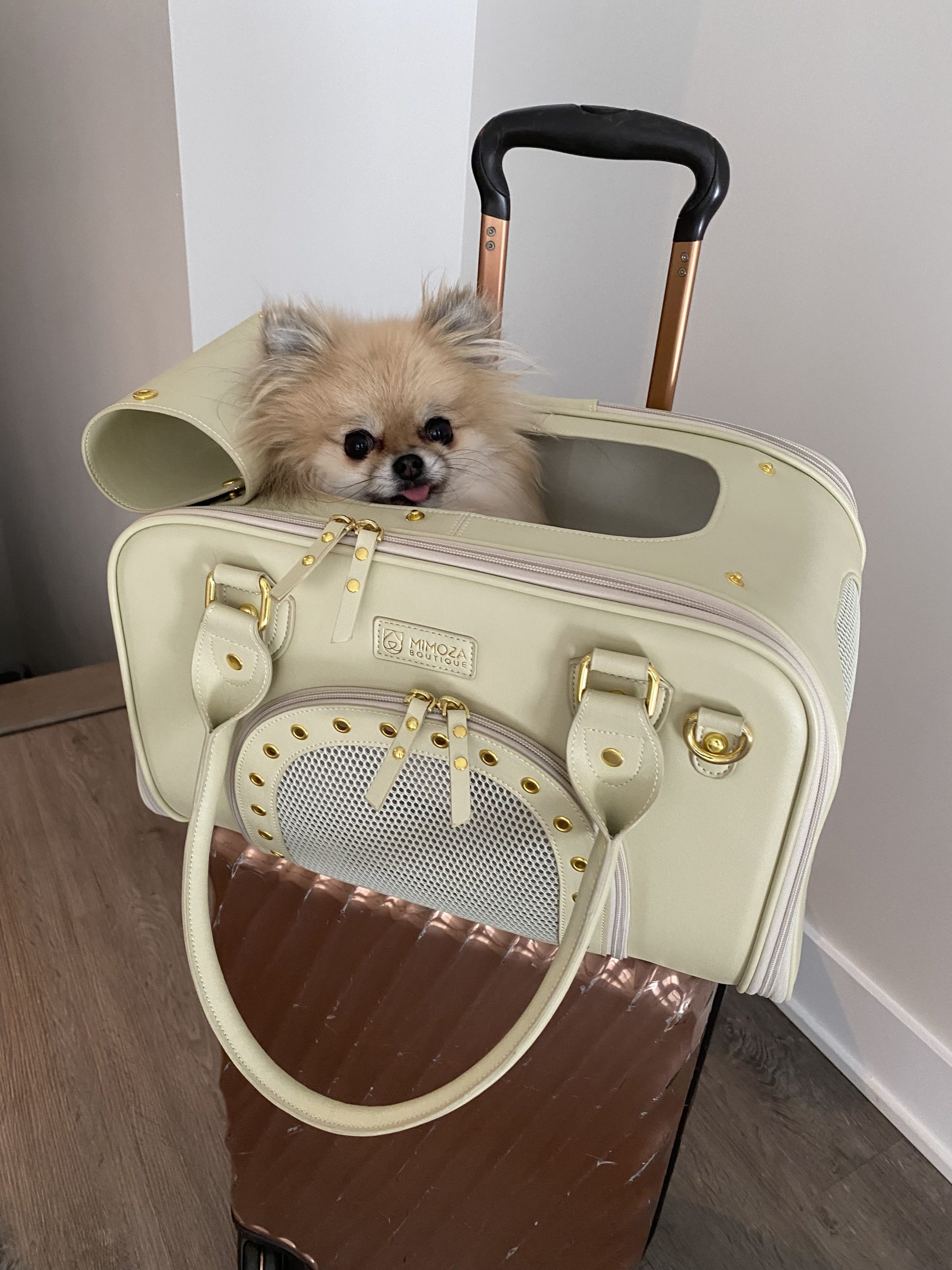
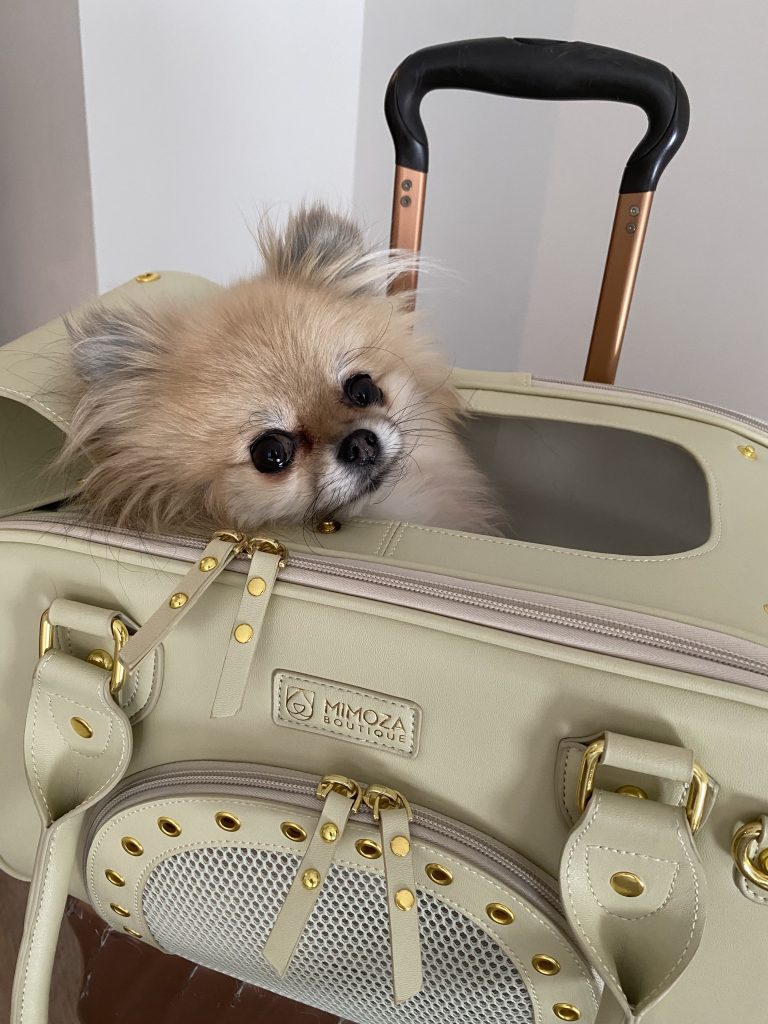
Traveling internationally with a small dog can be smooth and stress-free—if you prepare the essentials in the right order. This quick guide shares practical tips for international travel with a dog, based on real-life preparation steps: paperwork, vet visits, airline rules, and what to pack.

1) Start with timing and regulations
Every country (and sometimes each transit point) has its own entry requirements. Begin by checking: vaccination validity, dog health certificate rules, and whether you need additional endorsements (for example, CFIA endorsement in Canada). Build your timeline backwards from your flight date.

2) Rabies vaccination and titer test
For many destinations, rabies vaccination is mandatory, and some routes require a rabies antibody titer test. Ask your veterinarian about timing: the test often needs planning weeks in advance. Keep digital and paper copies of all results.

3) Microchip and document consistency
Make sure your dog’s microchip number is correctly listed on all documents. Names must match your passport/booking where required. In international travel, consistency prevents delays.

4) Airline rules: reserve PETC early
If you plan airline pet in cabin (PETC), reserve it as early as possible. Airlines limit the number of in-cabin pets per flight segment. Call support and ask them to confirm the allowance and availability for each leg of the itinerary.

5) Choose the Right Carrier — Size Matters

Airlines evaluate the carrier, not the dog’s body size.
This is one of the most important — and often misunderstood — rules of pet travel.

The carrier must fit under the seat, comply with airline regulations, and allow your dog to turn around and lie down comfortably during the flight. Soft carriers are usually preferred, as they adapt better to cabin space while providing comfort and flexibility.

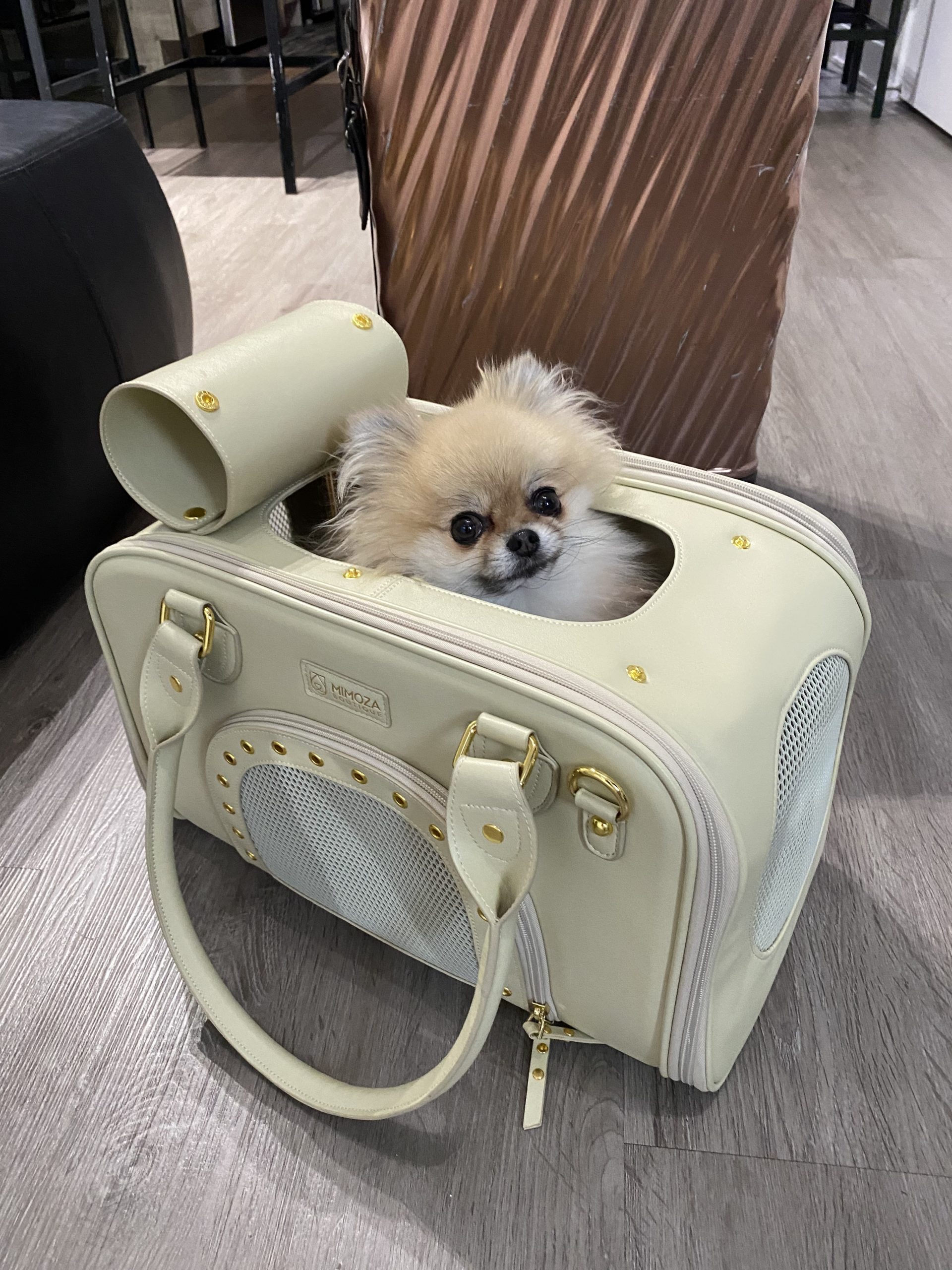
At MiMOZA Pet Boutique, we designed an ideal travel carrier for small companion dogs, based on real international travel experience.
Our carrier is created with care for safe, calm, and comfortable flights:

  • Designed to meet airline cabin requirements
  • Soft, breathable, and secure
  • Comfortable for long journeys
  • Suitable for in-cabin travel with small pets

Your pet’s comfort in the air is not a luxury — it’s a necessity.
A well-chosen carrier reduces stress, supports calm behavior, and makes the journey easier for both the pet and the owner.

6) Pack a calm “flight kit”
For travel with a small dog, pack: pee pads, wipes, collapsible bowl, a small water bottle, light treats, and a familiar blanket with a home scent. Keep everything easy to access.

7) Reduce stress in advance
Practice carrier time at home. Short daily sessions help your dog associate the carrier with safety. Calm routines matter more than last-minute “training.”

Final tip: create one folder with all originals and one folder with copies (paper + phone). A clear system lowers stress for both you and your dog.

If you’re planning international travel with a dog soon, save this checklist and follow it step by step—your future self will thank you.

MiMOZA Pet Boutique cares about safe and mindful travel — because your pet deserves comfort at every step of the journey.

Hey there, fellow dog lovers! 🐾✨

My headache was finding the right carry-on bag for traveling by plane with my little pet. Every bag I tried before was uncomfortable. As a perfectionist, I decided to create my own carry-on bag. That idea is now here, and I’d love to share it with you!

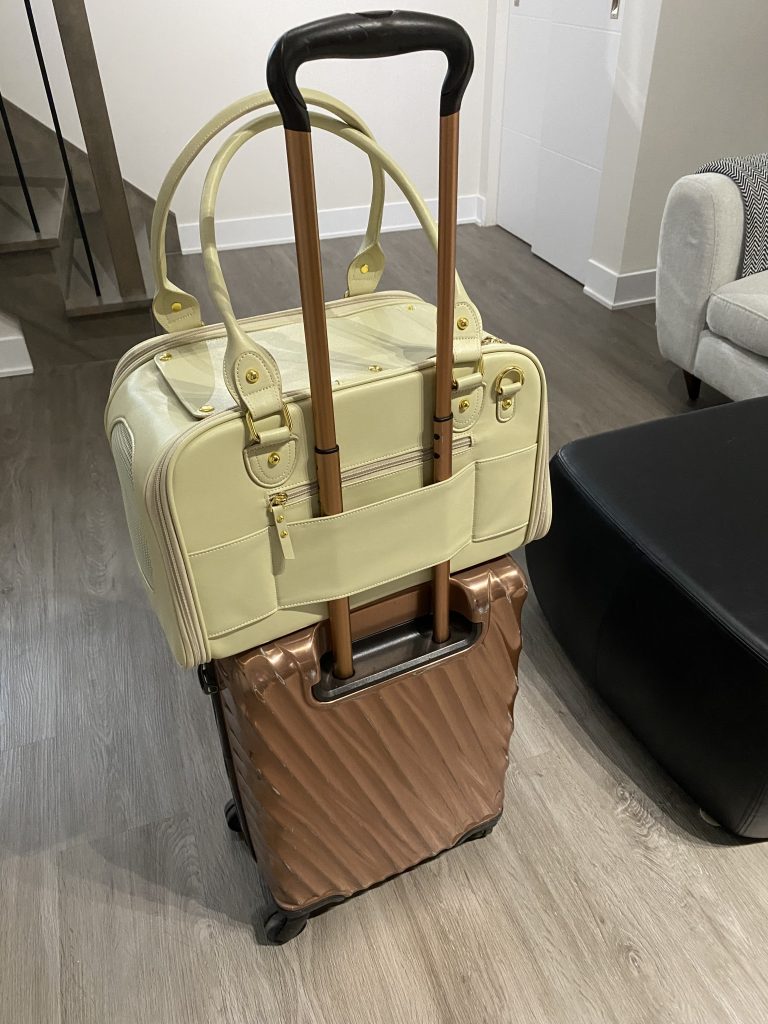
Are you ready to make your pet’s travel experience as comfy as a five-star hotel stay? Look no further! Introducing our fabulous Carry-on Pet Travel Bag—because your furry friend deserves the best in comfort and style on the go. The bag features three walls with elastic filters for air conditioning and a tight pocket holder that easily attaches to a suitcase handle.

Imagine your pup lounging in luxury, wagging their tail with joy as they travel in this ultra-cozy bag. It’s like first class, with great quality, safe/hard walls, stability, and a zip pocket on the side—but only for little pets! And guess what? It’s the perfect size for flights, designed to fit right under the front seat of the plane.

You can snag this stylish travel essential at a fantastic low price with our prepaid order delivery deal. Trust me, your fur baby will thank you with extra cuddles and maybe even a few happy barks.

So, pack those treats, grab that leash, and get ready for some tail-wagging adventures! Your pet’s ultimate travel comfort awaits.

🐶✈️✨

It’s wonderful that Mimoza enjoys traveling and that I have found it comfortable to travel with her on the plane. When traveling with a Pomeranian, it’s important to plan and prepare in advance to ensure a smooth and hassle-free trip.

Here are some things to take into consideration when traveling with your Pomeranian on a plane:

  • Check airline requirements: As we mentioned, it’s crucial to contact the airline you’ll be flying with to understand their specific requirements and policies for traveling with pets. Each airline may have different rules regarding pet travel, including carrier size, documentation, and any additional fees. Be sure to comply with their guidelines to avoid any issues during your journey.
  • Choose an appropriate carrier: Select a carrier that meets the airline’s size regulations for carry-on luggage. It’s recommended to choose a carrier that is well-ventilated, secure, and comfortable for your Pomeranian. Ensure that the carrier provides enough space for them to stand, turn around, and lie down comfortably.
  • Plan veterinary visits: Some countries require specific documentation or health checks for pets entering their borders. It’s essential to consult with your veterinarian to ensure your Pomeranian meets all the necessary health requirements for travel. This may involve obtaining a travel passport, updating vaccinations, and receiving a thorough check-up to ensure your dog is fit to fly.
  • Reserve your pet’s spot in advance: Airlines often have limited spaces available for pets in the cabin, so it’s advisable to reserve your Pomeranian’s spot as early as possible. Contact the airline directly to secure your pet’s place and to inform them of your intention to travel with a pet.
  • Prepare for security checks: When going through airport security, you will need to remove your Pomeranian from their carrier and carry them in your arms while the carrier goes through the X-ray machine. Ensure that your Pomeranian is comfortable and calm during this process.
  • Pack essentials: Pack all the necessary supplies for your Pomeranian’s comfort during the flight, such as food, water, treats, toys, and any medications they may need. Also, bring some absorbent pads or liners for the carrier in case of accidents.
  • Remember to follow any additional guidelines provided by the airline to ensure a smooth travel experience with your Pomeranian. By planning ahead, complying with regulations, and prioritizing your Pomeranian’s comfort and well-being, you can enjoy your travels together.

When traveling with your Pomeranian, it’s important to find accommodations that are pet-friendly and cater to the needs of both you and your furry friend.

Here are some tips for finding pet-friendly hotels:

  • Research pet-friendly hotels: Before making a reservation, research hotels that specifically advertise themselves as pet-friendly. Many hotels have designated pet policies, including allowing pets in certain rooms or areas of the hotel. Look for hotels that explicitly mention their pet-friendly amenities and policies on their website or when making a booking inquiry.
  • Check pet policies and fees: Read the hotel’s pet policy carefully to understand any restrictions or requirements they may have. Some hotels may have size or breed restrictions, limitations on the number of pets allowed per room, or specific rules regarding pet behavior. Additionally, inquire about any additional fees or deposits associated with bringing your pet.
  • Read reviews: Look for reviews or feedback from other pet owners who have stayed at the hotels you’re considering. Their experiences can provide insights into how pet-friendly the hotel truly is and how accommodating they are towards pets and their owners.
  • Amenities for pets: Find out what amenities the hotel offers for pets. Some pet-friendly hotels provide pet beds, bowls, treats, or even pet-sitting services. These additional amenities can enhance the comfort and convenience of your stay.
  • Plan ahead: Once you’ve selected a pet-friendly hotel, inform them in advance that you will be traveling with your Pomeranian. This allows them to make necessary arrangements and ensure a smooth check-in process.
  • Be a responsible pet owner: When staying at a pet-friendly hotel, it’s important to be a responsible pet owner. Keep your Pomeranian on a leash or in a carrier when in common areas, and clean up after them promptly. Respect the hotel’s rules and be considerate of other guests.
  • Remember, policies and amenities can vary between hotels, so it’s crucial to do your research and find a hotel that aligns with your needs and expectations. By choosing a pet-friendly hotel, you can enjoy a comfortable and enjoyable stay with your Pomeranian.

When you want to dine out with your Pomeranian, it’s important to find pet-friendly restaurants that allow dogs.

Here are some tips to ensure a pleasant dining experience for both you and your furry friend:

  • Research pet-friendly restaurants: Before heading out, research and find restaurants in your area that specifically advertise themselves as pet-friendly. Look for restaurants that have outdoor seating areas where dogs are allowed. Many establishments will mention their pet-friendly policies on their website or display signage indicating that dogs are welcome.
  • Call ahead: It’s a good idea to call the restaurant in advance to confirm their pet-friendly status and any specific guidelines they may have. This gives you an opportunity to ask about their outdoor seating arrangements, whether they provide water bowls or treats for dogs, and any other relevant information.
  • Leash and control: When visiting a pet-friendly restaurant, always keep your Pomeranian on a leash and under control. This ensures their safety as well as the comfort of other patrons. Make sure your Pomeranian is well-behaved and not causing any disturbances.
  • Bring essentials: Carry essentials for your Pomeranian, such as a water bowl, some treats, and waste bags. It’s important to clean up after your dog and be considerate of the restaurant’s cleanliness and other guests.
  • Be mindful of others: Remember that not everyone may be comfortable around dogs or have allergies. Keep your Pomeranian close to your table and away from other patrons unless they indicate that they are comfortable interacting with dogs. Respect any requests from the restaurant or other guests regarding the presence of your dog.
  • Practice good behavior: Ensure that your Pomeranian is well-behaved during the dining experience. This includes not begging for food, not jumping on tables or chairs, and remaining calm and quiet. Bringing some toys or distractions for your dog can help keep them occupied while you enjoy your meal.
  • By following these guidelines and being respectful of the restaurant’s policies and other patrons, you can have an enjoyable dining experience with your Pomeranian at pet-friendly restaurants. Always remember to prioritize your dog’s comfort and well-being while considering the needs of others around you.