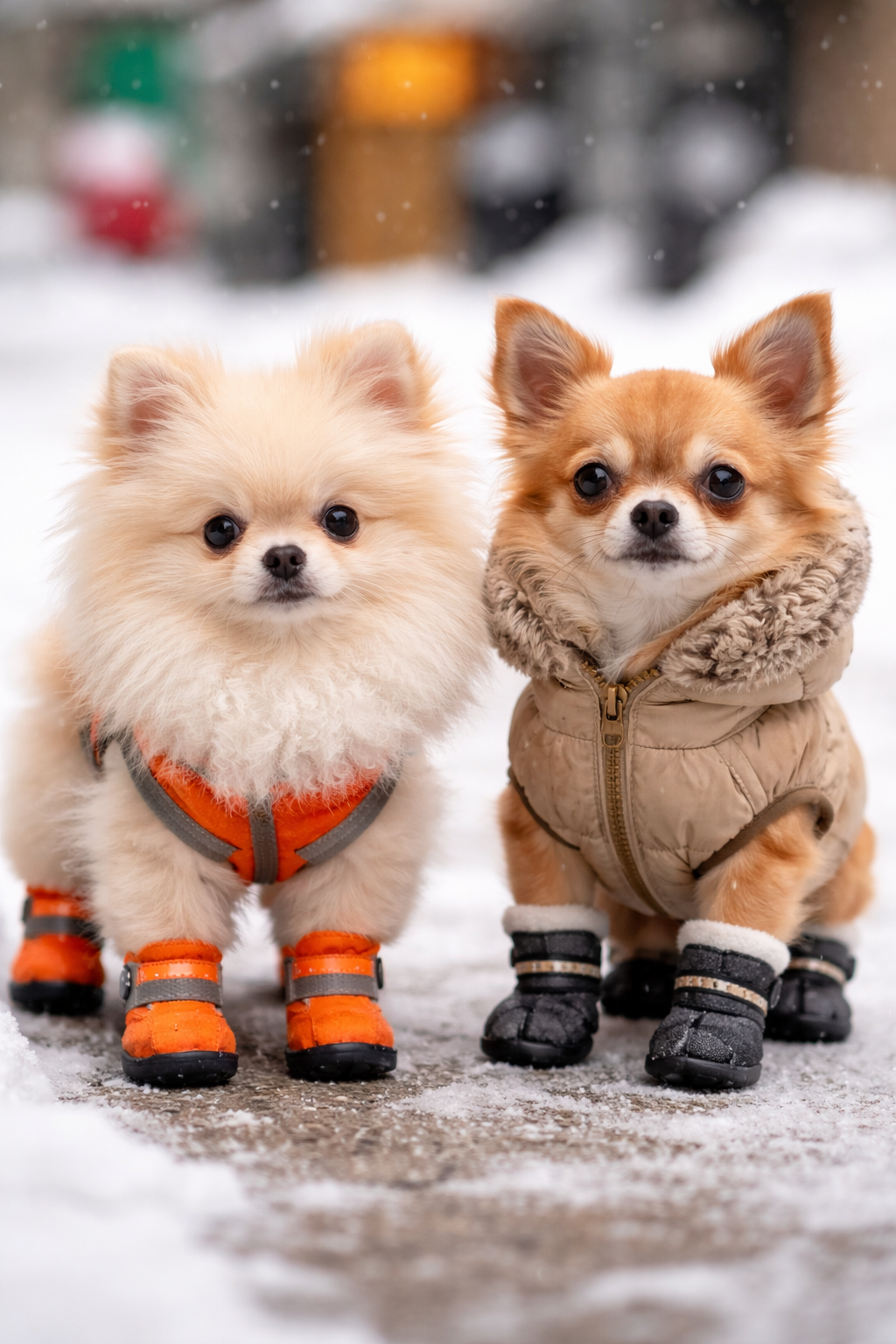
When we think about caring for our small pets, we often focus on nutrition, grooming, and regular veterinary visits. Yet one of the most vulnerable parts of a pet’s body is frequently overlooked: their paws. Paw pads are not just “cute little feet”—they are complex, sensitive structures that absorb impact, regulate temperature, and protect bones and joints.

For small domestic animals, especially toy-breed dogs and other companion pets that spend time outdoors, paw protection is not a luxury. It is a necessity in both cold and hot seasons.

This article explores why paw care matters, what dangers exist in winter and summer, and how responsible owners can prevent injury.


Why Paw Pads Are So Sensitive

A pet’s paw pads are made of thickened skin and fatty tissue designed to cushion movement. Despite their durability, they are still living tissue with nerve endings and blood supply.

They can crack, burn, dry out, or become chemically irritated. Small pets are especially at risk because:

  • Their body mass is low
  • Their paws are smaller and closer to the ground
  • They lose heat faster
  • They are more sensitive to environmental stressors

Healthy paws are essential for mobility, confidence, and overall well-being.


Winter Risks: More Than Just Snow

Many people assume winter danger equals cold snow. In reality, snow is only part of the problem.

Ice and Freezing Temperatures

Cold surfaces can cause:

  • Dryness and cracking
  • Micro-injuries
  • Frostbite in extreme conditions

Small dogs often lift their paws or refuse to walk when they are too cold. This is not stubbornness—it is a sign of discomfort.


Chemical De-icers and Road Salt

This is one of the biggest hidden threats. Streets and sidewalks are often treated with:

  • Salt
  • Chemical de-icers
  • Anti-freeze compounds
  • Mixed urban pollutants

These substances can:

  • Irritate skin
  • Cause burns
  • Trigger allergic reactions
  • Be toxic if licked

Pets naturally lick their paws after walks. If chemicals are present, ingestion becomes a real danger.


Sharp Ice and Mechanical Injury

Broken ice, gravel, and frozen debris can create tiny cuts. These may seem minor but can lead to:

  • Infection
  • Pain while walking
  • Long-term sensitivity

Summer Risks: Heat Is Just as Dangerous

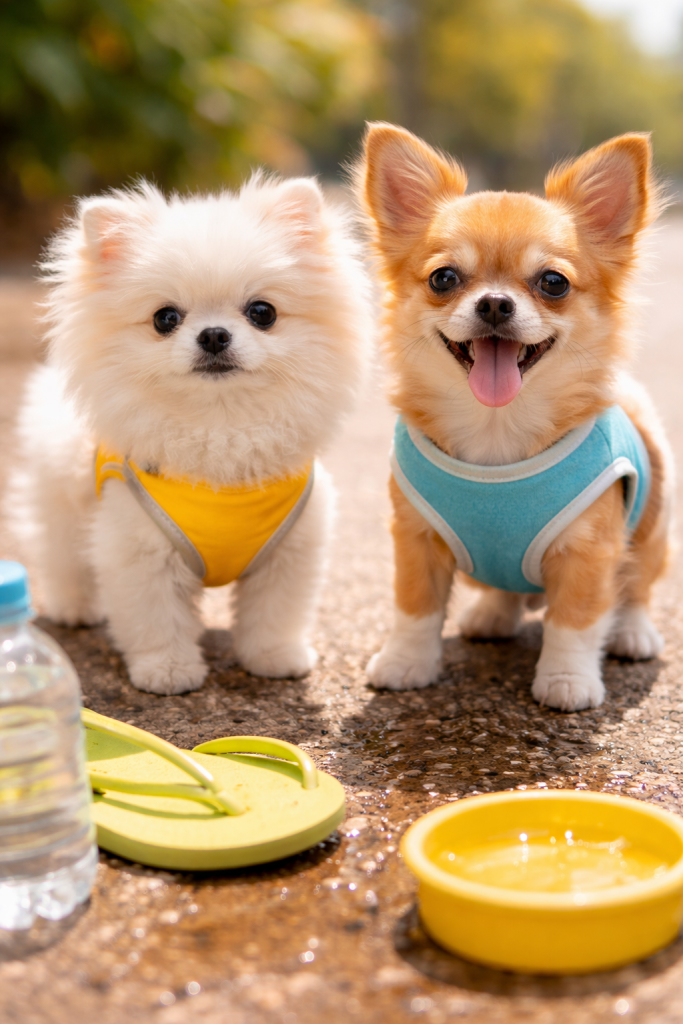
Many owners protect paws in winter but forget about summer. Heat can be equally harmful.


Hot Asphalt and Pavement

Sun-heated surfaces can reach temperatures far higher than the air temperature. Pavement may become hot enough to burn skin.

A simple rule:
If you cannot comfortably hold your hand on the pavement for 5–7 seconds, it is too hot for paws.

Burned paw pads can blister, peel, and become extremely painful.


Sand and Dry Ground

Beach sand and dry soil can overheat and cause irritation or burns. Small pets feel this quickly due to their size.


Signs of Paw Damage

Watch for:

  • Limping
  • Excessive licking
  • Redness or swelling
  • Cracks or bleeding
  • Reluctance to walk
  • Darkened or peeling pads

Any of these signals mean it is time to inspect the paws and possibly consult a veterinarian.


How to Protect Your Pet’s Paws

Use Protective Footwear

Pet boots are not fashion—they are functional gear. Good boots:

  • Shield from chemicals and heat
  • Prevent mechanical injury
  • Provide insulation
  • Improve grip on slippery surfaces

Introduce them gradually so your pet can adapt.


Paw Balms and Waxes

Protective balms create a barrier against:

  • Salt
  • Cold
  • Heat
  • Dryness

They also moisturize and prevent cracking.


Rinse Paws After Walks

In winter especially, rinse or wipe paws after walks to remove chemicals. Dry them thoroughly.


Test the Ground

Before walks:

  • Check pavement temperature in summer
  • Avoid peak heat hours
  • Choose shaded routes

Keep Fur Trimmed

Long fur between paw pads can trap ice, chemicals, and debris. Regular grooming reduces this risk.


Responsible Care Is Preventive Care

Protecting paws is part of responsible pet ownership. It prevents pain, medical bills, and long-term sensitivity.

Small actions—like checking the ground temperature or using balm—make a significant difference.


Final Thought

Our pets trust us completely. They walk where we lead them, even when it hurts. Paw care is a simple but powerful way to show respect for their comfort and safety.

Tiny paws carry big hearts. Protecting them is one of the kindest things we can do.
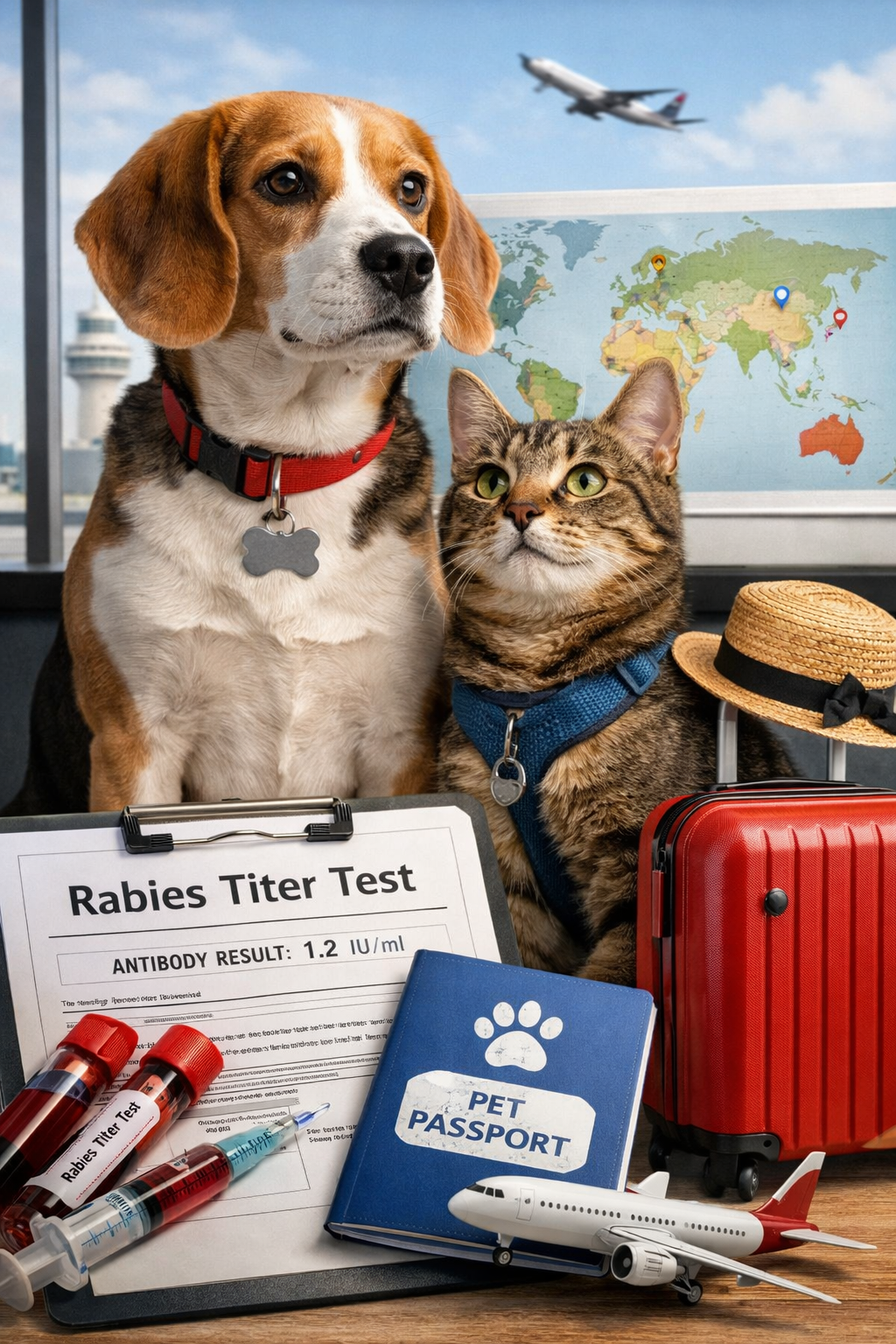
Traveling internationally with a pet is a beautiful experience — but it also comes with serious responsibilities. One of the most important, and often misunderstood, requirements for international pet travel is the Rabies Titer Test.

This test is not a formality. It is a key element of biosecurity that many countries rely on to prevent the spread of rabies — a deadly virus for both animals and humans. Proper preparation can make the difference between a smooth journey and months of stress, quarantine, or denied entry.

This article explains what the Rabies Titer Test is, why it matters, how it works, and why early planning is essential.


What Is a Rabies Titer Test?

The Rabies Titer Test (also called a rabies antibody titration test or rabies serology test) is a laboratory blood test that measures the level of antibodies in your pet’s blood after rabies vaccination.

In simple terms, it confirms that:

  • the rabies vaccine was administered correctly
  • the animal’s immune system responded properly
  • the level of protection meets international standards

For international travel, most authorities require a minimum antibody level of 0.5 IU/ml to consider the animal sufficiently protected.


Why Many Countries Require This Test

Rabies is still present in many parts of the world. Because of this, countries with strict animal health policies require proof that incoming pets do not pose a risk.

Countries that commonly require a Rabies Titer Test include:

  • European Union member states (for entry from certain non-listed or high-risk countries)
  • Japan
  • Australia
  • New Zealand
  • Singapore
  • United Kingdom (in specific cases)
  • Other rabies-controlled or rabies-free regions

Without an approved titer result, pets may face:

  • mandatory quarantine (weeks or months)
  • refusal of entry
  • return to the country of origin at the owner’s expense

An Important Reality: Only a Few Laboratories Are Accepted

One of the most critical points pet owners often miss is this:

Not all laboratories are authorized to perform Rabies Titer Tests for international travel.

Only a limited number of laboratories worldwide are officially certified and recognized by national and international veterinary authorities (such as the EU or Japanese authorities).

If the blood sample is analyzed by a non-approved lab, the result may be completely invalid, regardless of how good the antibody level is.

This is why professional guidance and early planning are so important.


The Step-by-Step Process

1. Rabies Vaccination Comes First

Your pet must be vaccinated against rabies with an internationally recognized vaccine.

Important:

  • The pet must be microchipped before vaccination (for most countries).
  • The vaccination must be valid and properly documented.

2. Mandatory Waiting Period

After vaccination, you must wait at least 30 days before blood can be drawn for the Rabies Titer Test.

Blood drawn earlier will not be accepted.

3. Blood Sampling

A veterinarian takes a blood sample and sends it to an approved laboratory.

This step must be done carefully:

  • correct labeling
  • correct microchip number
  • correct documentation

Any error can invalidate the test.

4. Laboratory Analysis

The lab measures the level of rabies antibodies.

Processing time varies:

  • usually 3 to 6 weeks
  • sometimes longer during peak travel seasons

5. Validity of the Result

In most cases:

  • the Rabies Titer Test remains valid as long as the rabies vaccination remains valid
  • typically up to 3 years, provided boosters are done on time

If a booster is missed or delayed, the entire process may need to be repeated.


Timing Is Everything

One of the biggest mistakes pet owners make is starting too late.

Consider this realistic timeline:

  • rabies vaccination
  • 30-day waiting period
  • blood sampling
  • 3–6 weeks for lab results
  • additional waiting period required by some countries

In practice, preparation can take 2 to 4 months, sometimes more.

This is why international travel with pets should always be planned well in advance.


Common Mistakes to Avoid

  • assuming any laboratory can perform the test
  • vaccinating after blood sampling
  • missing the 30-day waiting rule
  • letting the rabies vaccine expire
  • starting preparation too close to the travel date

Each of these mistakes can lead to delays, additional costs, or denied entry.


Why This Test Protects Everyone

Beyond paperwork, the Rabies Titer Test serves a larger purpose:

  • protects rabies-free countries
  • protects local animal populations
  • protects people
  • ensures your pet is genuinely protected

It is a responsible step that reflects care, planning, and respect for international health standards.


A Thoughtful Approach to Traveling With Pets

Traveling with a pet is not just logistics — it is a commitment to their safety, comfort, and well-being.

The Rabies Titer Test is one of those quiet but crucial steps that makes international travel possible without fear, quarantine, or last-minute surprises.

With the right preparation, certified laboratories, and proper timing, international pet travel can be smooth, safe, and humane.


Final Thoughts

If you are planning to travel internationally with your pet:

  • start early
  • follow the correct sequence
  • work only with certified laboratories
  • keep all documents carefully organized

Preparation is not stress — it is peace of mind.

At MiMOZA Pet Boutique, we believe that responsible preparation is part of loving your pet. International travel should be an extension of care, not a risk.

Traveling internationally with a small dog can be smooth and stress-free—if you prepare the essentials in the right order. This quick guide shares practical tips for international travel with a dog, based on real-life preparation steps: paperwork, vet visits, airline rules, and what to pack.

1) Start with timing and regulations
Every country (and sometimes each transit point) has its own entry requirements. Begin by checking: vaccination validity, dog health certificate rules, and whether you need additional endorsements (for example, CFIA endorsement in Canada). Build your timeline backwards from your flight date.

2) Rabies vaccination and titer test
For many destinations, rabies vaccination is mandatory, and some routes require a rabies antibody titer test. Ask your veterinarian about timing: the test often needs planning weeks in advance. Keep digital and paper copies of all results.

3) Microchip and document consistency
Make sure your dog’s microchip number is correctly listed on all documents. Names must match your passport/booking where required. In international travel, consistency prevents delays.

4) Airline rules: reserve PETC early
If you plan airline pet in cabin (PETC), reserve it as early as possible. Airlines limit the number of in-cabin pets per flight segment. Call support and ask them to confirm the allowance and availability for each leg of the itinerary.

5) Choose the Right Carrier — Size Matters

Airlines evaluate the carrier, not the dog’s body size.
This is one of the most important — and often misunderstood — rules of pet travel.

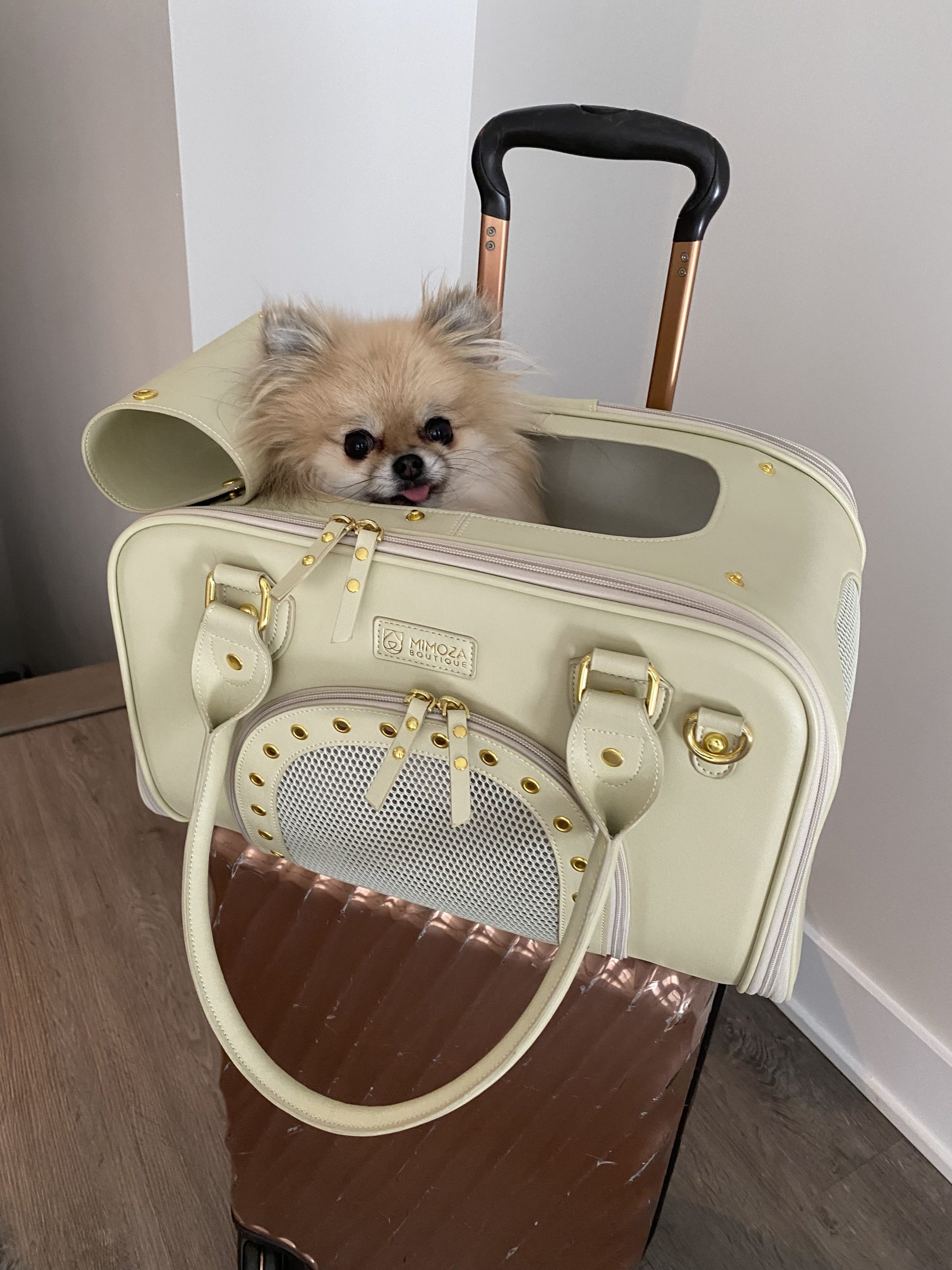
The carrier must fit under the seat, comply with airline regulations, and allow your dog to turn around and lie down comfortably during the flight. Soft carriers are usually preferred, as they adapt better to cabin space while providing comfort and flexibility.

At MiMOZA Pet Boutique, we designed an ideal travel carrier for small companion dogs, based on real international travel experience.
Our carrier is created with care for safe, calm, and comfortable flights:

  • Designed to meet airline cabin requirements
  • Soft, breathable, and secure
  • Comfortable for long journeys
  • Suitable for in-cabin travel with small pets

Your pet’s comfort in the air is not a luxury — it’s a necessity.
A well-chosen carrier reduces stress, supports calm behavior, and makes the journey easier for both the pet and the owner.

6) Pack a calm “flight kit”
For travel with a small dog, pack: pee pads, wipes, collapsible bowl, a small water bottle, light treats, and a familiar blanket with a home scent. Keep everything easy to access.

7) Reduce stress in advance
Practice carrier time at home. Short daily sessions help your dog associate the carrier with safety. Calm routines matter more than last-minute “training.”

Final tip: create one folder with all originals and one folder with copies (paper + phone). A clear system lowers stress for both you and your dog.

If you’re planning international travel with a dog soon, save this checklist and follow it step by step—your future self will thank you.

MiMOZA Pet Boutique cares about safe and mindful travel — because your pet deserves comfort at every step of the journey.

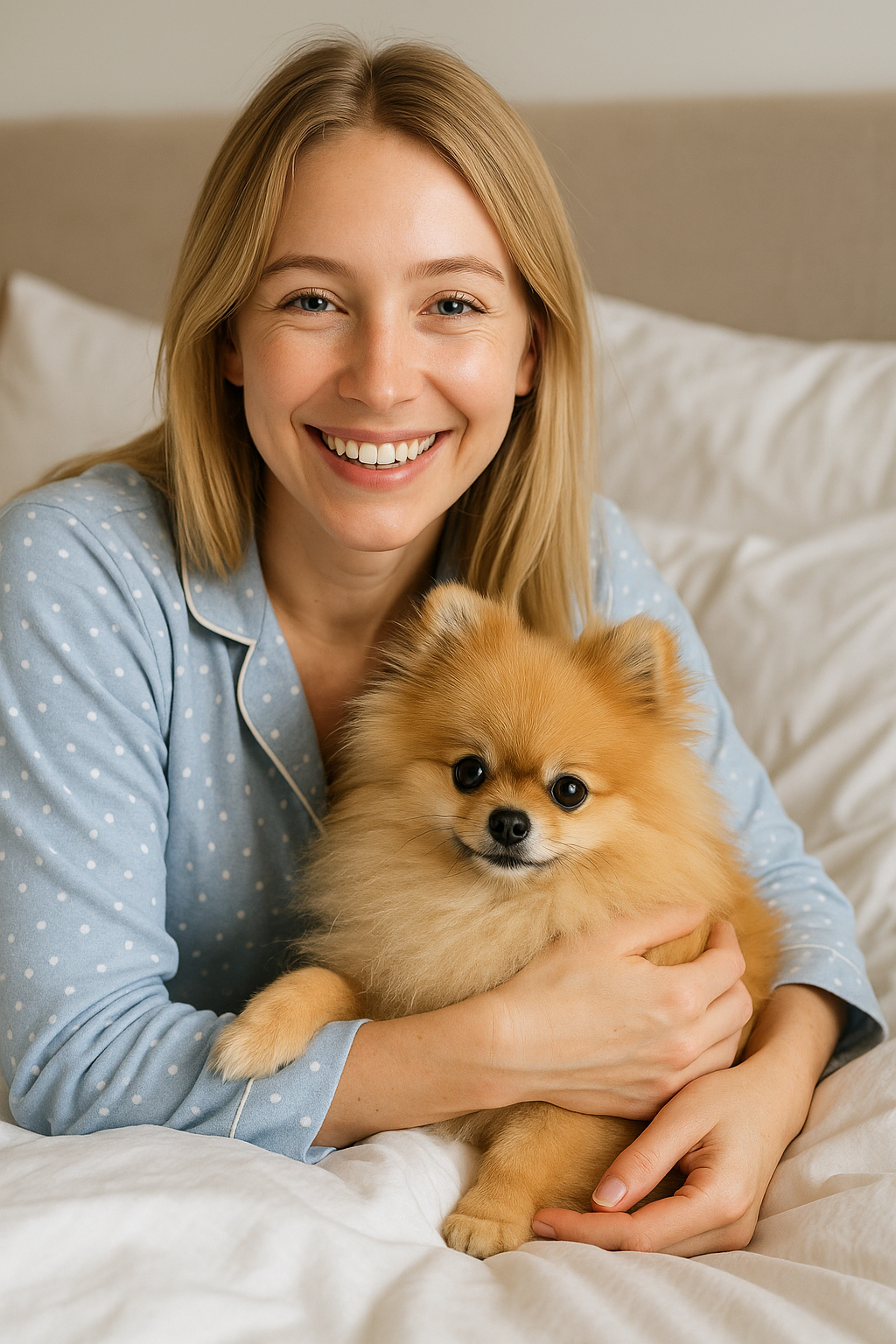
Some people say sleeping with your dog is wrong. Others just smile, adjust the pillow, and tuck their fluffy friend in a little closer. As always, the truth lies somewhere in between. 

Sharing a bed with your dog isn’t just a habit.
It’s a way to calm the nervous system, reconnect with a living being, and feel the kind of emotional support that we all sometimes need.
When a person falls asleep next to their dog, a unique hormonal dialogue begins — the body responds to warmth and steady breathing with a release of oxytocin, the hormone of trust and love.


What Happens When a Tail and a Heartbeat Are Beside You

Studies show that even short interactions with animals reduce levels of cortisol (the stress hormone), stabilize heart rate, and improve sleep quality.
People who regularly spend time with their pets tend to experience less anxiety and recover faster after emotional exhaustion.

If you’ve ever had a sleepless night with your dog breathing quietly beside you, you probably know that feeling —
the hush, the soft sigh, the warmth — and suddenly the world feels safe again.
It’s not magic — it’s the biology of trust.


Sleep as a Shared Ritual

When a dog sleeps next to you, it feels part of a pack.
For them, it’s not just about comfort; it’s a signal:  I’m safe. My human is near.
And for us, it’s a return to presence — a moment of calm after a day filled with screens, deadlines, and noise.

Sleeping together becomes less about indulgence and more about a ritual of restoration.
It’s a reminder that warmth and trust are also forms of self-care.


But There Are Conditions

A few simple rules help make shared sleep truly healing:

  • Your dog should be clean and healthy, free from parasites or odors.
  • Bedding should be fresh and comfortable.
  • And above all — mutual comfort and consent.
    If your dog prefers their own space, don’t insist.
    Support should never be forced.

Every human–dog pair creates its own rhythm.
Some sleep side by side; others simply rest a hand on their pet’s fur near their feet — and that alone builds connection.


Why It Matters Especially Today

In a world where stress levels rise and loneliness quietly spreads, animals often become our emotional companions.
They don’t demand perfection. They don’t compare. They don’t question.
They simply are.

When a person loses their sense of emotional balance, the gentle breath of a dog can become a small point of return —
a simple, wordless form of emotional therapy.


Feelings That Can’t Be Bought

You can buy a mattress, a pillow, a sleep lamp —
but you can’t buy that sense of home inside yourself.
That energy comes from a living creature who trusts you without conditions.

Sleeping beside your dog reminds us that safety isn’t built from walls —
it’s the warmth you feel when someone small and loyal sleeps and breathes next to you.


A Small Reminder

The rule is simple:
if both you and your dog feel calm, cozy, and happy — then it’s right.
Sleeping with your pet isn’t a whim; it’s a bond that heals.

Let every morning begin with a wagging tail, a soft breath,
and the quiet thought that happiness isn’t far away —
it’s right here, curled up beside you.

📖 Read the full story on Medium →

The story of Mimoza and important tips for dog owners

Yesterday my little Mimoza was happily jumping around the house, as she always does. But suddenly — one wrong move, and she landed awkwardly. Her right back paw twisted, and she started limping. For me, as her mom, it was heartbreaking to see my fluffy baby hopping on three legs, tail tucked in, trembling with fear.

This moment reminded me how important it is to stay attentive and gentle with our pets. Small toy breeds like Pomeranians or Chihuahuas are incredibly energetic and playful, but their joints and ligaments are very fragile.


The First Thing to Do

When your dog suddenly injures a paw, the most important step is to remain calm. Pets immediately feel their owner’s anxiety, which only adds to their stress.
Give your pup a safe, quiet space. Sit with them, talk softly, and gently pet them. Sometimes just a few minutes of peace is enough for them to settle down.


Observation Is the Key

In the hours and days after the injury, careful observation is crucial. Is there swelling? Does the pain seem to increase? Is your dog trying to put weight on the paw or avoiding it completely?
In Mimoza’s case, there was no swelling, and she sometimes even forgot and stepped on the paw. That’s a good sign that the injury isn’t critical, but it still requires rest and attention.


When to See a Veterinarian

If your dog shows strong swelling, constant whining, refuses food, or avoids using the paw altogether, it’s time to go to the vet. Joint or ligament injuries may look minor at first, but without proper diagnosis you risk missing a serious condition.


The Importance of Love and Presence

Dogs, just like humans, respond not only with their bodies but also with their hearts. After her injury, Mimoza tucked her tail, her ears trembled, and she swallowed often — clear signs of fear.
At times like these, what helps most is love and presence. A calm voice, gentle touches, and the feeling of “you are not alone” give your pet strength and reassurance.


Conclusion

This story isn’t only about Mimoza’s paw. It’s about the responsibility and mindful care we give to our four-legged companions. Pets bring us joy and unconditional love every single day. In return, they need so little: attention, patience, and the readiness to act when they are in pain.

🩷 May your little ones stay happy and healthy.


Author: Jenya Alexander
Founder of Mimoza Pet Boutique

At Mimoza Boutique, our philosophy is simple: every little paw deserves not only love, but also attention to the small changes that reveal how your pet feels. My own dog, Mimoza, has taught me many lessons about noticing the quiet signals that say: “I don’t feel well, please stay close.”

1. Notice the Change in Energy

Most days, Mimoza is playful and full of life. But sometimes she prefers to stay on my lap, asking for warmth and closeness. If your normally energetic dog suddenly seems more tired or needy, it may be a sign of discomfort.

2. Respect Their Need for Comfort

On those “quiet days,” I let Mimoza rest, cuddle her gently, and give her space to feel safe. Your presence alone can be the strongest medicine. Dogs often recover better when they feel supported and loved.

3. Keep Gentle Control

Small symptoms can pass — but they can also be the start of something bigger. Always keep an eye on how long unusual behavior lasts. If your dog continues to seem unwell, consult your vet. Early attention can make all the difference.

4. Create a Healing Environment

Warmth, gentle strokes, calm words — these small acts can soothe anxiety and help your dog cope. For Mimoza, simply being close helps her body and spirit recover more easily.

5. Love Is Preventive Care

The bond between you and your dog is a powerful resource. Emotional connection reduces stress and can even strengthen immunity. Your care is not just comfort — it’s part of their healing process.


✨ Every dog has its language of signals. When we listen with love, we give them the gift of safety and healing.

With love,
Jenya Alexander

Founder of MiMOZA Pet Boutique 🐾

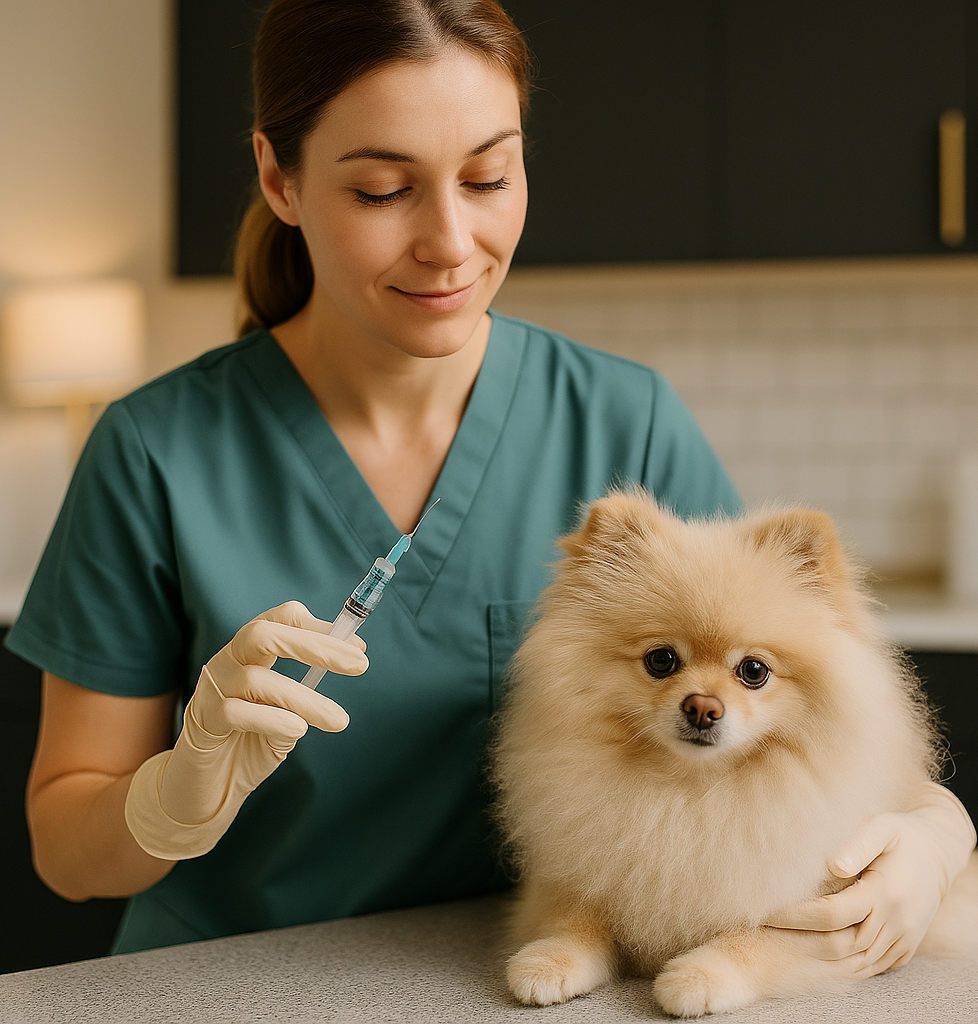
In just a few days, my tiny 4-pound fluffy Mimoza will face one of the less pleasant parts of her life: the rabies vaccination. She doesn’t enjoy visits to the veterinary clinic — the strange smells, the unfamiliar hands, the stress of waiting. And, like many small dogs, she often feels unwell after vaccinations. Yet, this moment is essential — not only for her health but for ours, too.


Why Rabies Vaccination Matters

Rabies is one of the oldest and deadliest viral diseases in the world. Once symptoms appear, there is no cure — it is fatal for both animals and humans. The good news is that rabies is 100% preventable through vaccination.

  • In Canada and the United States, rabies vaccination for dogs is mandatory in most provinces and states. After the initial one-year booster, many areas require the vaccine every three years.
  • In Europe, regulations vary, but rabies vaccination is essential for protection and for travel between EU states.
  • For international travel, rabies vaccination is non-negotiable. Whether you’re flying from Montreal to Paris or New York to London, proof of an up-to-date rabies vaccination is required. Without it, pets may be denied entry or placed in lengthy quarantine.

The Process and the Quarantine Period

After the vaccine is administered, the body needs time to build protective antibodies. That is why many countries require a 21-day waiting period after rabies vaccination before allowing international travel. This acts as a “mini-quarantine,” ensuring your pet is fully protected.

For us, this means that after Mimoza gets her shot, we will pause, stay calm, and wait. No rushing, no travel plans — until her immunity is confirmed.


Preparing for Vaccination

Vaccination can be stressful — for pets and for us, their humans. Here’s how I prepare both Mimoza and myself:

  • Stay calm — animals pick up on our emotions. If I am anxious, she will be too.
  • Bring comfort — her favorite blanket or toy to remind her of home.
  • Hydration and rest — ensuring she drinks enough water and has a quiet, calm space afterward.
  • Plan the day — no other activities are scheduled. We stay home together, giving her extra love and gentle care.
  • Watch closely — mild side effects like tiredness or soreness at the injection site are normal. Severe reactions are rare but require immediate veterinary attention.

Living With Care and Responsibility

Rabies vaccination is more than a requirement. It is an act of love — protecting our pets, ourselves, and our communities. For little ones like Mimoza, it’s not an easy day, but it’s one we face together.

When the clinic visit is over, the paperwork is done, and she curls up in my lap afterward — I remind myself: this is what responsibility looks like. This is how love is expressed in action.

What no brain trainer can give you…

We’re often told: “Train your memory,” “Keep your brain active,” “Stay mentally sharp.”
But what if one of the most powerful tools for cognitive health… walks on four paws?

Researchers at the University of Geneva have made a compelling discovery:
Living with a dog can slow cognitive decline, sharpen memory, and support mental clarity — particularly in older adults.

Why?
Because a dog is more than just a pet. It’s a daily connection, a reason to move, a source of joy, and a subtle kind of structure.
Caring for a dog keeps you present, emotionally engaged, and mentally stimulated — all of which are essential for healthy brain aging.

In their 18-year study of Europeans aged 50 and over, researchers found that dog owners retained sharper short- and long-term memory, and showed greater activity in the prefrontal cortex — the part of the brain linked to attention, emotional regulation, and decision-making.

As one researcher put it:
“Spending time with a dog isn’t just enjoyable — it may actually help prevent cognitive decline.”

🐾 Small Dogs, Big Impact

Miniature breeds play a unique role in this story.
They’re highly adaptable, easy to care for, affectionate, and well-suited for close companionship — especially in urban or later-life settings.

Far more than a charming presence, a small dog offers emotional richness and gentle routine, helping owners stay active, social, and connected to everyday joy.

💛 Dogs Remind Us How to Live

While we search for complex ways to support our health, a dog simply brings you a toy.
Or curls up beside you.
Or meets your gaze with a look that says: “I’m here. Right now. With you.”

And maybe, in caring for them, we relearn how to care for ourselves.

Small dog breeds are often seen as symbols of comfort, joy, and carefree companionship. Their compact size makes them ideal for apartment living and traveling, but beneath their delicate exterior lies incredible strength. These little dogs possess an extraordinary ability to provide emotional and energetic support to their owners.


Why Are Small Breeds So Intuitive?


Their petite size doesn’t diminish their sensitivity and intuition:
– Always Close By: Small dogs can easily stay physically close to their owner. They’re ready to sit on your lap, cuddle, or nap beside you, absorbing your tension and discomfort.
– Focus on Their Human: Their size often fosters a strong focus on their person, making them highly responsive to mood and condition.
– Energetic Connection: Small dogs, like their larger counterparts, can sense changes in your emotional state and physical health.
– Energetic Shield: How Do They Protect Us?
Have you noticed that your small dog becomes particularly attentive during stressful times? Many owners believe their dogs take on some of their stress and pain.


Anecdotal evidence shows:
Small dogs often lie on areas of discomfort, such as the chest or stomach.
They encourage owners to play or go for walks, serving as natural stress relievers.
Even their cheerful barking can lighten an emotional atmosphere, shifting your focus.


Real-Life Stories: The Incredible Impact of Small Dogs
Emotional Support in Stress: One of my clients shared how their toy poodle helped them through a nervous breakdown. Whenever they cried, the dog would climb onto their chest, staring into their eyes and offering calming reassurance.


Health Awareness: A friend once told me how her Chihuahua started behaving oddly, jumping and nudging her leg repeatedly. A month later, she was diagnosed with a blood clot. She firmly believes the dog helped her catch it early.


How to Care for These Little Heroes
If your dog is attuned to your energy and helps you handle life’s challenges, remember that they need care too:
Take them on regular walks and playtime to release built-up tension.
Create a calm and safe environment at home, as they are sensitive to arguments and loud emotions.
Shower them with affection and attention. They thrive on your love and connection.


The Power of Their Love and Care
Small dogs share their unconditional love, helping restore harmony during difficult times. It’s astounding how such tiny beings can bring joy and serve as your shield against the invisible forces of stress and illness.

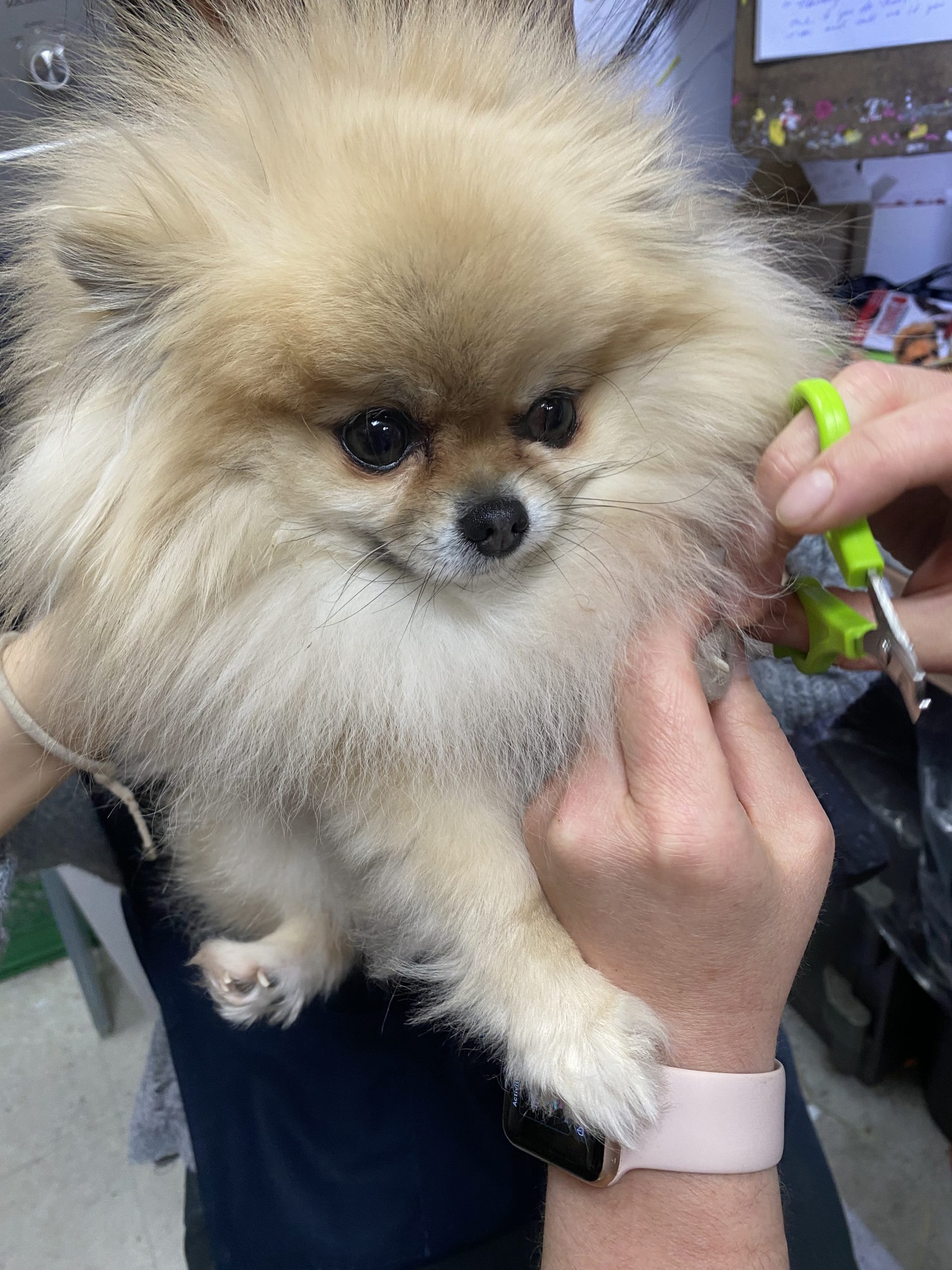
Gather ’round, friends, and let me share with you the epic tale of my darling Pomeranian, Mimoza, and the notorious nail-clipping escapade that unfolds every three weeks. It’s a saga filled with drama, suspense, and a touch of humor!

Once upon a time, in the cozy corners of my living room, a fluffy princess named Mimoza ruled her domain with grace and fluffiness. But there was one dark cloud that loomed over her otherwise perfect life: the dreaded nail-clipping day. Mimoza, with her majestic coat and sassy attitude, was not a fan. Not. At. All.

Every three weeks, the ritual begins. Armed with treats, a comfy blanket, and the best nail clippers money can buy, I prepare for the showdown. Mimoza, sensing the impending doom, morphs into a mini Houdini, using all her cunning to evade capture. She runs, she hides, she gives me those heart-melting puppy eyes – anything to avoid the clipper’s grasp.

But alas, the day must be saved, and Mimoza’s nails must be trimmed. With patience and a little bit of trickery (read: bribery with her favorite treats), I manage to coax her onto my lap. The struggle is real, folks. It’s like trying to hold a squirming, fluffy whirlwind. She wiggles, she squirms, she even attempts a daring escape.

Finally, with a swift and careful hand, I manage to clip one nail. Mimoza gives me a look that says, “How could you betray me like this?” But with each clipped nail, she gets a treat, and slowly but surely, we get through the ordeal. It’s a battle of wills, but in the end, love and patience win out.

The result? Mimoza emerges with perfectly trimmed nails, ready to prance around and show off her fabulous self once more. And I? I’m left with a sense of accomplishment, a handful of dog hair, and the certainty that we’ll do this all over again in three weeks.

So, fellow dog parents, remember: patience, treats, and a good sense of humor are your best friends on nail-clipping day. Your Pomeranian might not love it, but they’ll love you for taking such good care of them. Until next time, happy grooming! 🌟