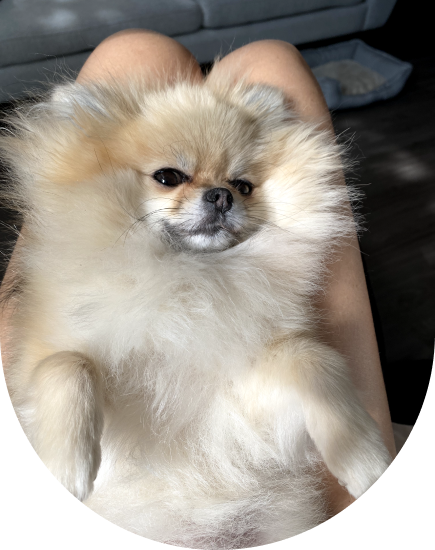
By Jenya Alexander — Founder of MiMOZA Pet Boutique.


When “Bad Behavior” Isn’t Bad at All

Let’s be honest — if your dog acts a little wild, it’s rarely just about the dog.
Most of the time, it’s about you.

Our dogs are emotional mirrors.
They pick up the smallest cues — your tone, your stress level, the way your shoulders tighten, even the way you breathe.
Your dog doesn’t only hear you — she feels you.

If your pup seems anxious, reactive, or restless, don’t rush to blame her personality.
Pause and ask yourself: What part of me is she reflecting right now?


The Mirror on Four Paws

Dogs are not just our companions — they are moving reflections of our inner world.
When you rush, your dog becomes hyperactive.
When you stay calm, she settles instantly.
When you worry, she looks at you with that “what’s wrong?” face, mirroring your tension perfectly.

Many dog owners think their dogs “misbehave,” but in truth, most of those behaviors are messages.
Your dog is saying, “Hey, this is what your energy feels like right now.”


Training Starts Within

Dog training isn’t just about teaching commands — it’s about emotional consistency.
Before your dog learns to sit, stay, or come, she learns how your nervous system behaves.
Your calm voice, your steady breathing, your gentle presence — those are the first lessons she ever receives.

Every leash correction, every “good girl,” every moment of patience or frustration becomes a signal.
You are not just the trainer — you’re the environment your dog grows in.


Dogs Feel Before They Think

Humans think first, feel later.
Dogs feel first — and that is their genius.

They sense vibrations, tone, body movement, and rhythm long before words appear.
This is why a dog will come closer when you’re sad or step back when you’re angry — not because she understands words, but because she reads frequencies.

If you want a balanced dog, you have to become a balanced human.
And that’s not a punishment — it’s an invitation to grow together.


Emotional Wi-Fi: Always On

Think of your dog as emotional Wi-Fi — always connected to your signal.
If the connection feels messy, she starts buffering.
If it’s stable and loving, she relaxes and flows.

That’s why anxious owners often have anxious dogs.
Calm owners have peaceful ones.
It’s never about dominance — it’s about resonance.


A Funny Truth: They Copy Us Too Well

Sometimes it’s funny how literally they mirror us.
Your dog starts yawning during your Zoom calls, rolls eyes (well, almost) when you complain, or waits at the fridge when you’re stressed at midnight.
She’s your emotional twin — just smaller, furrier, and much cuter.

They say pets resemble their owners.
Turns out, they become them — minus the credit card bills.


Healing Together

The next time your dog misbehaves, take a breath.
Instead of reacting, get curious.
What is she showing you about yourself?

Maybe her restlessness is your hidden anxiety.
Maybe her need for attention is your unspoken need for connection.
And maybe her peace — when you finally slow down — is your reward for showing up differently.


Harmony Is a Shared Practice

Dogs don’t need perfect owners — they need present ones.
Your presence, your calm attention, your consistency — that’s the real obedience training.
Once you change your energy, your dog doesn’t just follow commands… she syncs with you.

So if your dog acts a little crazy, smile.
Because maybe she’s not losing it — she’s just reflecting the parts of you that still need a hug.


Final Thought

Living with a dog is like living with your emotional mirror — honest, loyal, and without filters.
Every wag, bark, or sigh is feedback from the universe wrapped in fur.

So listen closely.
You might just realize your dog has been helping you heal all along. 🐾💛


Author: Jenya Alexander
Founder of MiMOZA Pet Boutique Montreal — where psychology meets paw prints.

Getting a furry friend into your home is always a joy and a new wave of emotions. However, sometimes taming a dog can be a real challenge. In my case, I got my Mimoza when she was only a year old and ran into a serious problem – she was peeing everywhere except in the right place.

I tried different techniques and tips, turned to a trainer and even purchased a special cage to limit her space. I expressed my dissatisfaction when she made mistakes, and expressed joy when she did it right. But despite all my efforts, Mimoza continued to pee in different places around the house.

Seven months of training seemed endless, and despair began to take over. However, at one point something changed, and Mimoza began to understand the rules of the game. The key to success was the system of rewards and punishments. When she went to the toilet in the right place, she got a treat, and if she made a mistake, we go to the cage. It was a breakthrough, and luck was on our side.

Today, I can proudly tell myself that perseverance and faith in my dog paid off. As time passed, I realized that the key factors were regularity, clear explanation, repetition, love, and trust that Mimoza could learn the rules. We shared victories and rejoiced at each other. She knew what she was doing was right and tried to please me. She also realized her mistakes and went into the cage, punishing herself.

My experience training Mimoza taught me many lessons. The main thing is not to despair and continue the routine. Dogs, like people:) learn gradually and need our support and tolerance. They are able to understand our emotions and reactions, so it is important to maintain a positive attitude and believe in success.

I am proud of myself and the success of my Mimoza. It’s been a long journey, but it has taught me patience, faith, and the importance of love and support in raising our furry companions.

Pomeranians are known to be loyal companions who often follow their owners closely. Their strong attachment can bring a lot of joy and fulfillment to your life. However, it’s important to be mindful of their small size and presence when you move around.

Here are a few things to consider to ensure the safety of your Pomeranian:

  • Be aware of their presence: Pomeranians are small and can easily go unnoticed, especially when you’re in a hurry or not paying close attention. Take care to be aware of their presence, especially when walking around the house or moving quickly. Look down and make sure you don’t accidentally step on or trip over them.
  • Walk slowly and mindfully: As you mentioned, learning to walk slowly can be important when you have a Pomeranian. Take deliberate steps and be cautious of where your dog is positioned, especially if they tend to stay close to your feet. Slow, deliberate movements can help prevent accidental injury.
  • Create a safe environment: Ensure that your living space is safe for your Pomeranian to navigate. Keep walkways clear of clutter or items that could pose a tripping hazard. Secure any loose wires or cords that your dog might get tangled in. By creating a safe environment, you minimize the risk of accidents.
  • Use visual and verbal cues: Establish visual and verbal cues to indicate your movements to your Pomeranian. For example, you can use a hand signal or say “watch out” before you change direction or stand up. Consistently using these cues will help your Pomeranian understand and anticipate your movements, reducing the chance of accidental collisions.
  • Provide proper training: Training your Pomeranian to respond to commands such as “stay” or “move aside” can be helpful in situations where you need them to stay clear or give you space. Basic obedience training can provide the foundation for a well-behaved and responsive companion.
  • By being mindful of your Pomeranian’s presence, taking things slow, and providing appropriate training, you can ensure a safe and enjoyable companionship with your little one. Enjoy the special bond that comes with having a loyal and devoted Pomeranian by your side!

Pomeranians can provide wonderful emotional support. However, it’s important to be aware of their tendencies towards excitement and anxiety. Teaching them self-control can be beneficial for their overall well-being.

Here are some tips for helping your Pomeranian develop self-control:

  • Set consistent boundaries: Establish clear rules and boundaries for your Pomeranian. This includes behaviours such as not jumping on people, waiting patiently for meals, and not demanding attention excessively. Consistency is key in reinforcing these boundaries.
  • Positive reinforcement training: Utilize positive reinforcement techniques to encourage and reward desired behaviours. When your Pomeranian demonstrates self-control, such as remaining calm in a stimulating situation, provide verbal praise, treats, or playtime as a reward. This helps reinforce the behavior and motivates them to continue practicing self-control.
  • Gradual exposure to stimuli: If your Pomeranian tends to become overly excited or anxious in certain situations, such as meeting new people or encountering other dogs, gradually expose them to these stimuli in controlled and positive ways. Start with less overwhelming scenarios and gradually increase the intensity as they become more comfortable and exhibit self-control.
  • Mental stimulation: Engage your Pomeranian in mentally stimulating activities, such as puzzle toys, obedience training, or interactive games. These activities help redirect their energy and provide an outlet for their natural curiosity and intelligence. Mental stimulation can also help reduce anxiety and promote focus and self-control.
  • Calm and structured environment: Create a calm and structured environment at home. Establish a routine for feeding, exercise, playtime, and rest, as this can help reduce anxiety and provide a sense of security for your Pomeranian. Minimize chaotic or high-stress situations whenever possible.
  • Remember, each Pomeranian is unique, so it’s essential to observe and understand your dog’s specific needs and triggers. If you’re struggling with training or your Pomeranian’s anxiety levels, consider consulting with a professional dog trainer or a veterinary behaviourist who can provide personalized guidance and support.

Good news, Pomeranians are eager to learn and please their owners! Consistency and positive reinforcement are key when training your Pomeranian for good behaviours.

Here are some additional tips to continue educating your puppy:

  • Basic commands: Teach your Pomeranian basic commands such as “sit,” “stay,” “come,” and “down.” Use positive reinforcement techniques like treats, praise, and rewards to encourage and reinforce their understanding and compliance with these commands. Practice these commands in different environments and gradually increase distractions to help your Pomeranian generalize the behaviors.
  • House training: Pomeranians can be trained to use pee pads or designated areas for toileting. Establish a consistent routine for bathroom breaks and reward your puppy when they use the appropriate area. Be patient during the house training process, as accidents may happen initially. Consistency, supervision, and positive reinforcement will help your Pomeranian understand the desired behavior.
  • Socialization: Expose your Pomeranian to various people, animals, and environments from an early age to help them become well-adjusted and confident. Gradually introduce them to different experiences, such as meeting new people and dogs, exploring new environments, and encountering different sights and sounds. This exposure will help prevent fear or aggression towards unfamiliar situations and promote positive social behaviors.
  • Proper chewing habits: Pomeranians, like all dogs, have a natural inclination to chew. Provide appropriate chew toys and discourage chewing on household items by redirecting their attention to the toys. Supervise your puppy during playtime to ensure they don’t chew on inappropriate objects. If you catch your Pomeranian chewing on something they shouldn’t, redirect them to a suitable chew toy and provide positive reinforcement when they engage with it.
  • Ongoing training and mental stimulation: Pomeranians thrive on mental stimulation. Continue to provide opportunities for learning and engagement throughout their lives. Incorporate interactive toys, puzzle games, and obedience training sessions to keep their minds active. Ongoing training sessions can reinforce good behaviors and introduce new commands or tricks, keeping your Pomeranian mentally stimulated and engaged.
  • Remember, training takes time, patience, and consistency. Celebrate your puppy’s successes, and be understanding if they make mistakes along the way. By providing a loving and structured environment and continuing their education, you’re setting your Pomeranian up for a lifetime of good behavior and a strong bond with you as their owner.